Polycarbonate sheets have become one of the most widely used rigid coverings in commercial greenhouse construction, and for good reason. It combines high impact resistance, strong insulation, and dependable light transmission in a panel that’s a fraction of the weight of glass, without the fragility that comes with it.
Why Growers Choose Polycarbonate Sheets
- High impact resistance. Polycarbonate sheets stand up to hail, debris, and heavy snow loads far better than glass or fiberglass, which matters most in exposed sites and harsh winters.
- Strong insulation. Multi-wall panels trap air between layers, and that trapped air is what gives polycarbonate its insulating value. R-values range from around 1.5 for thinner twin-wall panels up to over 3 for thicker multi-wall configurations, so the panel you choose has a direct effect on your heating costs.
- Fire safety. Polycarbonate is a self-extinguishing thermoplastic. It doesn’t support a flame the way some other glazing materials can.
- UV protection. Polycarbonate largely reflects UV rather than transmitting it, and most sheets include a UV-protective coating or coextrusion layer to slow yellowing and degradation over time.
- Lighter than glass. Lower weight means less structural load on your frame and easier, faster installation.
Corrugated (single-wall) sheets
Corrugated (single-wall) sheets have a ridged, wavy profile that adds strength without adding layers. They transmit light efficiently, up to around 90% under ideal conditions, and their ribbed shape helps diffuse sunlight evenly across the crop below. They’re a common choice for siding and interior walls where insulation matters less than durability and light.
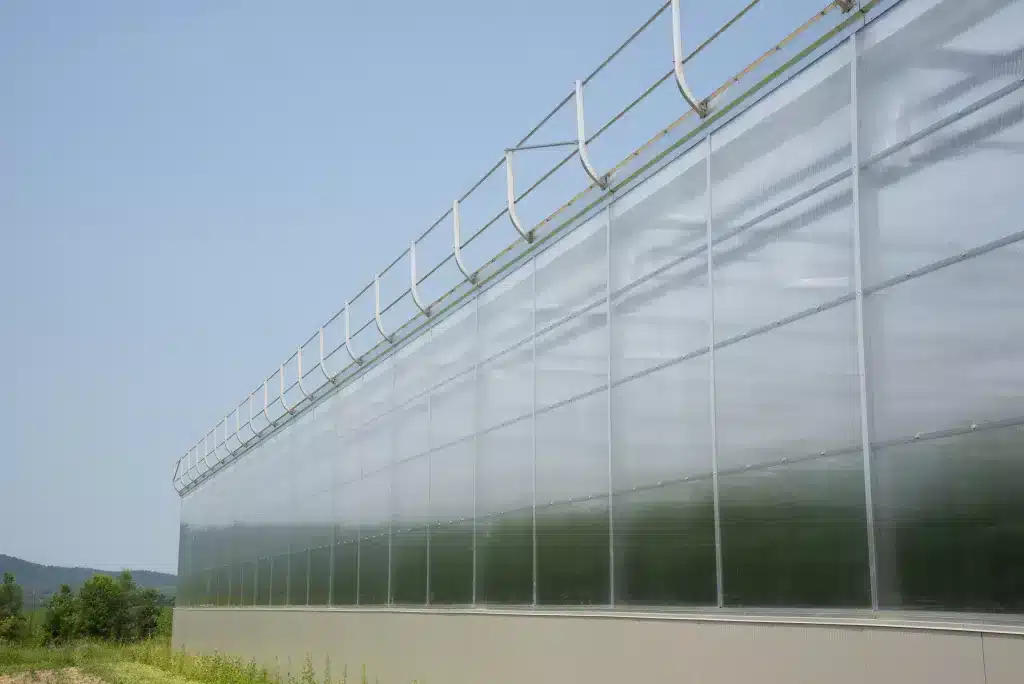
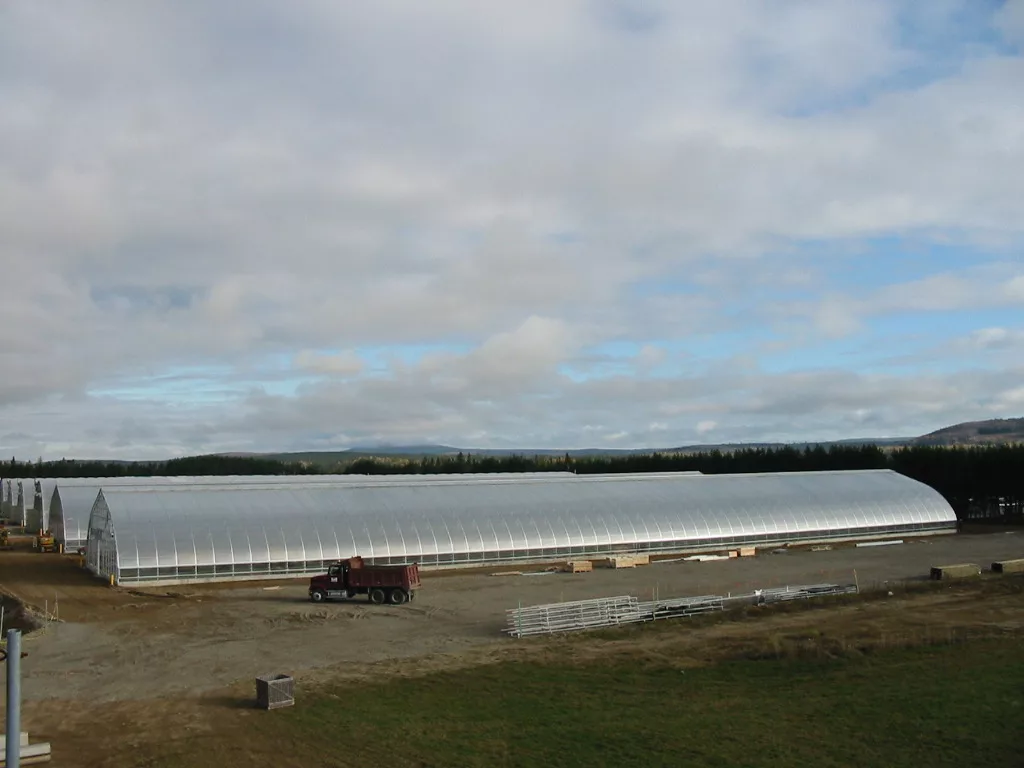
Polycarbonate sheets: Technical Specifications
- Available thicknesses: 6 mm, 8 mm, 10 mm (depending on the greenhouse model)
- Hollow-core structure
UV protection on one or both sides - Lightweight, quick installation
- Compatible with all our Harnois greenhouse models
Built to Last
With proper UV protection, multi-wall polycarbonate sheets can perform well for 20 years or more, though most manufacturer warranties cover a 10 to 15 year window. Because polycarbonate expands and contracts more than glass with temperature swings, it needs to be anchored with a glazing system designed for that movement rather than fastened rigidly. Getting that detail right at installation is what determines whether a polycarbonate covering delivers its full lifespan or fails early at the seams.
Ideal For
- Growers who need a durable, low-maintenance covering that can take a beating from weather
- Cold climates where insulation value directly affects heating costs
- Sidewalls and interior partitions where impact resistance and low upkeep matter most
- Retrofits where reducing structural load compared to glass simplifies the project
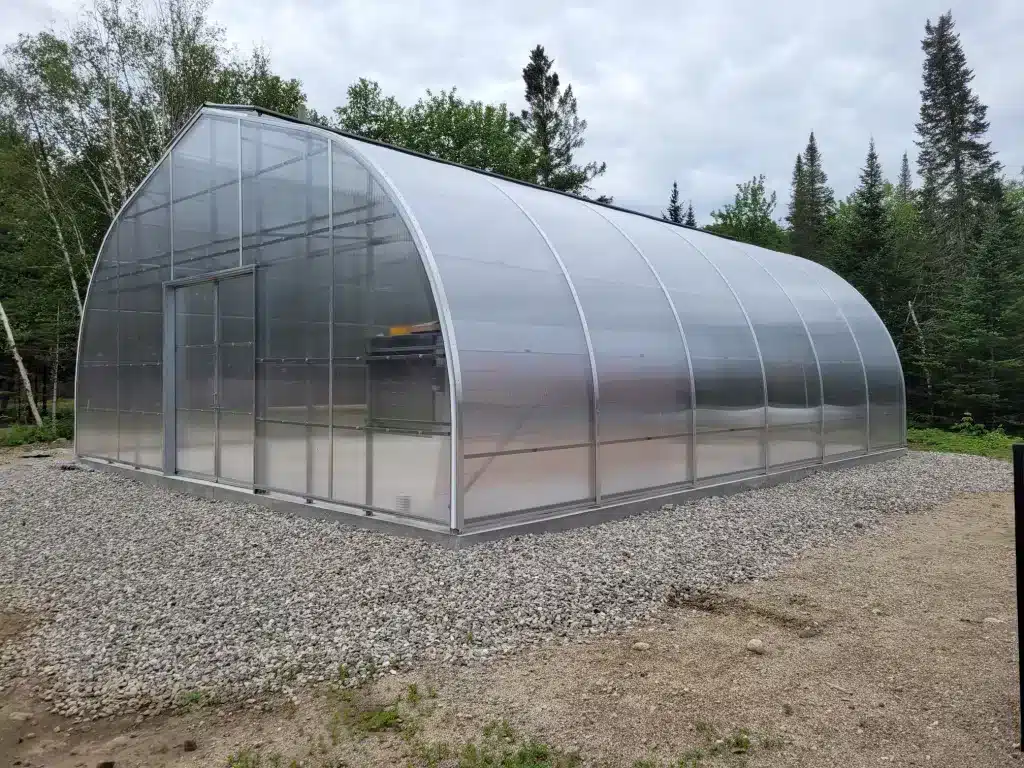
Not sure if Polycarbonate Sheets fit your project? Our team can help you match the right polycarbonate configuration to your climate and your crop.