A shade house gives you a lightweight, cost-effective way to protect plants, staff, and customers from sun and wind without the investment of a fully enclosed greenhouse. It’s a steel frame covered in shade cloth instead of poly or glass, built to moderate light and temperature rather than fully control climate.
Garden centers use shade houses to keep shoppers comfortable and displayed plants from drying out or scorching. Nurseries use them to harden off young plants before they go outside. Growers of shade-sensitive crops use them as a primary production structure. In every case, the goal is the same: cut the intensity of full sun without cutting off airflow.
Why Add a Shade Structure to Your Operation
- Protects plants from sun and wind. Shade cloth cuts direct sun exposure and softens wind load on foliage, reducing leaf scorch and physical damage.
- Keeps moisture in the soil longer. Less direct sun means less evaporation, so plants dry out more slowly between waterings.
- Encourages natural ventilation. An open-sided, lightweight structure moves air freely, which matters for disease pressure and for keeping shoppers comfortable in retail settings.
- Extends your usable growing and display area. A shade house is faster and less costly to put up than a fully enclosed greenhouse, making it an efficient way to add covered space.
- Supports hardening off. Young plants moving from a controlled greenhouse to outdoor conditions do better with a transition space that softens sun and wind exposure.
Choosing the Right Shade Cloth
Shade cloth isn’t one product. Growers choose based on shade percentage, weave, and sometimes color, depending on the crop and the climate.
- Shade percentage tells you how much sunlight the cloth blocks. Higher percentages block more light and cut temperatures more aggressively, but they also reduce the total light available to the crop, so the right density depends on what you’re growing and how intense your local sun is.
- Weave type affects durability and airflow. Tightly woven cloths tend to hold their shape and resist tearing, while knitted cloths flex more and are easier to work with on curved or irregular framing.
- Color is sometimes used deliberately, since different colors filter different light wavelengths and can influence how a crop grows, though most commercial applications simply prioritize durability and consistent shading over color-driven effects.
Our Shade House System
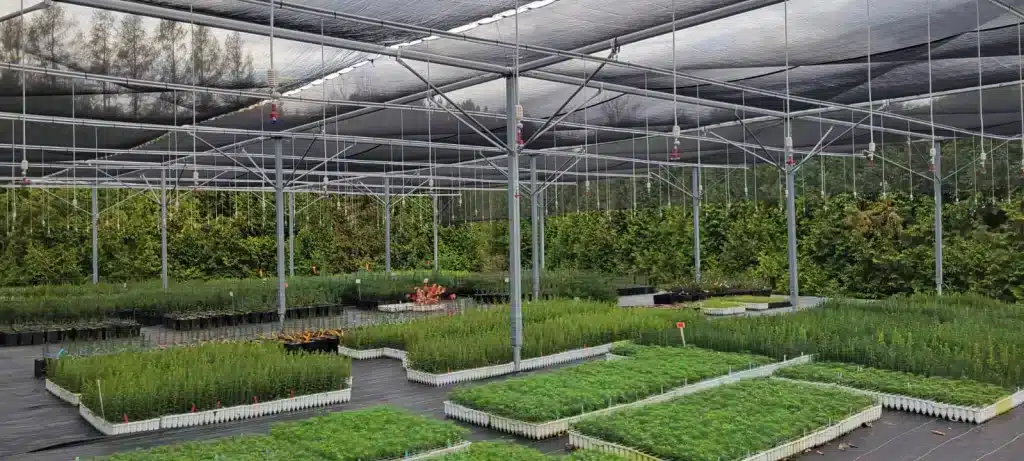
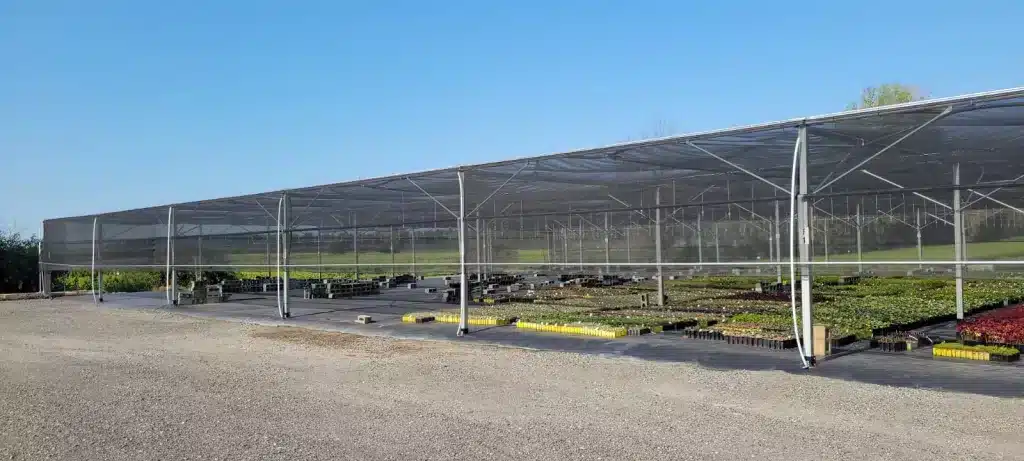
Our shade house structures use a steel frame covered in a durable, UV-resistant shade cloth. Sections are sold in modular units, so you can cover a small display area or scale up to a large production block using the same system, at a lower cost per square foot than a fully enclosed structure.
Widths:
- 20′
- 24′
- 25′
- 26′
Heights:
- 10′
- 12′
Shade density:
- 50%
Ideal For
- Retail garden centers looking to keep shoppers comfortable and displayed plants healthy
- Research institutions and public gardens needing a controlled but open-air space
- Nurseries hardening off young plants before transplanting outdoors
- Growers of perennials or shade-tolerant crops needing protection from intense sun
Not sure which shade density or layout fits your site? Our team can help you size a shade house to your space and your crop.