Glass covering remains the benchmark for light transmission in commercial greenhouse coverings. It’s the material large-scale ornamental and produce operations reach for when maximizing natural light matters more than anything else, and it’s a long-standing choice for garden center storefronts where appearance matters as much as performance.
Why Growers Choose Glass Govering
- High light transmission. Glass covering typically reaches 95% light transmission or more, compared to 90-91% for a high-performance polyethylene film. It also diffuses light more evenly throughout the greenhouse, reducing hot spots and shadowing, an advantage for crops with high photosynthetic activity like tomatoes and peppers.
- Durability. Properly specified glass handles snow and wind loads reliably over a long service life, without the tearing or puncturing risk that plastic film coverings face.
- Low thermal expansion and contraction. Glass moves far less than polycarbonate or film as temperatures swing, which simplifies the glazing system and reduces long-term seal issues.
- Non-combustible. Glass adds no fuel load to a fire, an advantage in retail and institutional settings where code requirements are stricter.
- Easy to maintain. Smooth, non-porous surfaces shed dirt and algae more easily, regular cleaning is generally all it takes to keep panels clear and performing.
- Better pest barrier. A well-sealed glass structure offers stronger protection against insects, rodents, and unwanted entry than a film-covered structure.
- Recyclable. Glass covering is fully recyclable at end of life, unlike polyethylene film, which is harder to recycle.
Types of Glass Glazing
Not all greenhouse glass covering performs the same way. A few types come up most often in commercial projects:
- Low-iron glass reduces the greenish tint of standard glass and pushes light transmission even higher, which matters most for light-sensitive or high-value crops.
- Tempered and safety glass are treated to break into small, less hazardous pieces on impact rather than large shards, which is often required by code in retail or public-facing structures.
- Diffused glass scatters incoming light rather than passing it straight through, spreading it more evenly across the canopy and reducing hot spots and shadowing between plants.
- Anti-reflective (AR) coatings cut the amount of light bounced away at the glass surface, so more of it actually reaches the crop instead of being lost on entry.
Additional coatings can push performance further. Anti-condensate coatings spread moisture into a thin, even film instead of letting it collect and drip, and IR-blocking coatings limit how much heat builds up under intense sun, protecting crops from burning.
The Role of Curtain Systems
The covering isn’t the only thing that determines your greenhouse’s insulation value. An energy curtain, closed at night or during cold stretches, creates a dead air space above the crop that can roughly double the effective insulating value of the roof. That’s part of why growers can choose a high light-transmission covering like glass without necessarily taking a hit on heating costs: the curtain does the insulating work when it’s needed, and stays open the rest of the time to let light through.
Common Uses of Glass Glazing
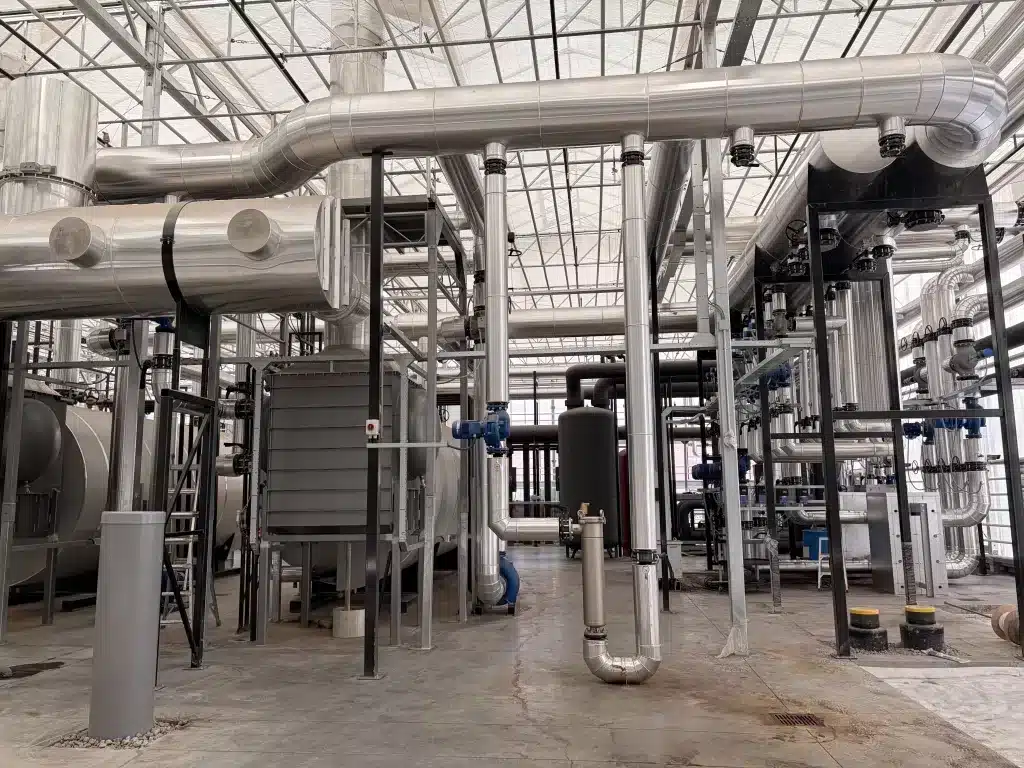
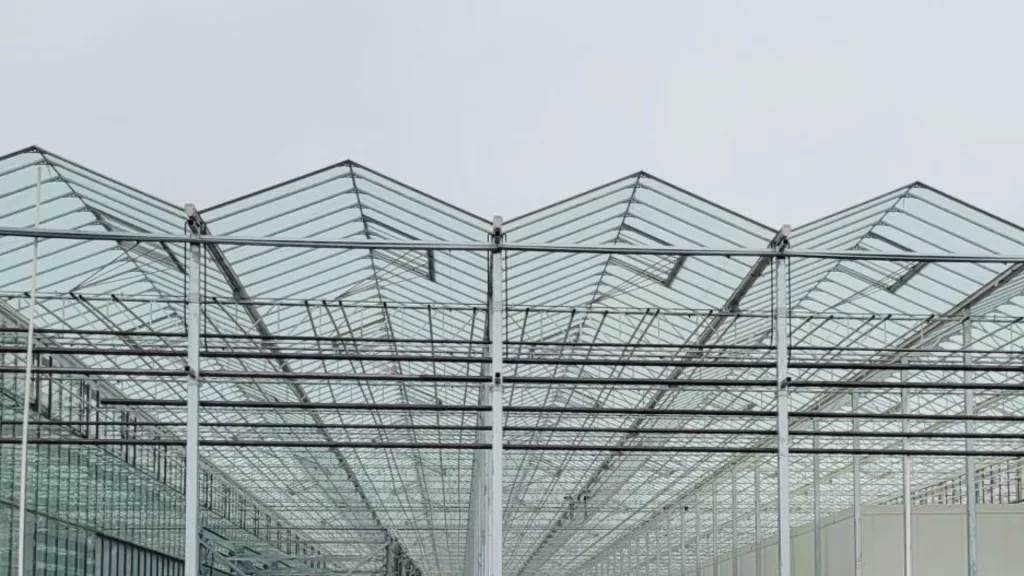
Venlo-style and A-frame greenhouses in large-scale ornamental and produce production
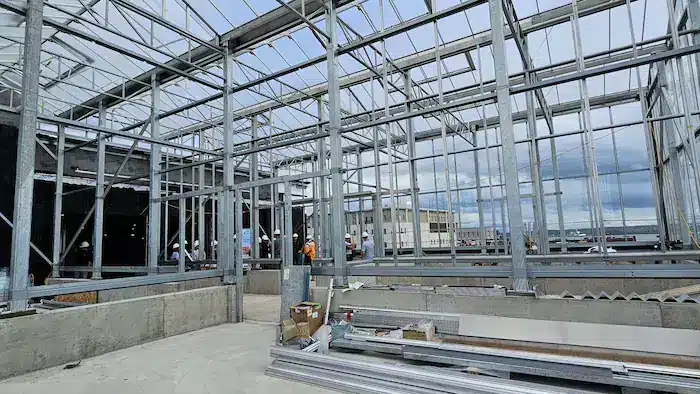
Institutional and research greenhouses where light quality and long-term durability matter most
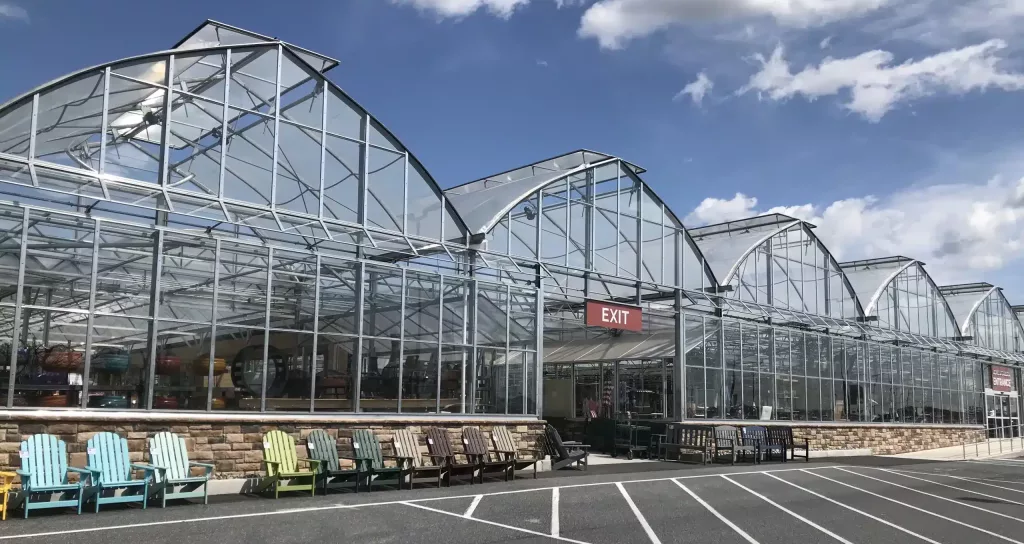
Garden center storefronts and retail display structures
Harnois's Glass Greenhouse: Vermax
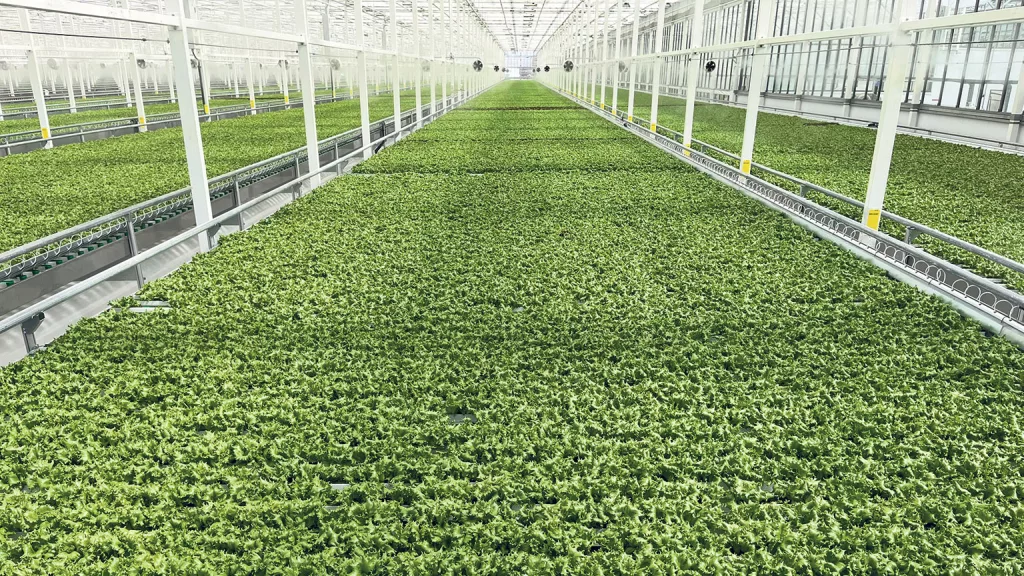
When a project calls for glass, our Vermax line is a Venlo-style glass greenhouse engineered and manufactured in Canada, built for growers who need maximum light transmission alongside precise climate control. It’s the structure we point large-scale produce and ornamental growers toward when glass is the right call for their crop and their site.
Not sure if glass is the right covering for your project? Our team can help you weigh it against polycarbonate and film based on your crop, your climate, and your budget.