At the 2024 Indoor Ag-Con in Las Vegas, one conversation stood out above the rest. Dr. Leila Sabeh — better known in the CEA greenhouse community as Dr. Greenhouse — sat down with Felix Chassouant, Sales Director at Harnois Greenhouses, for a candid discussion about where CEA greenhouse growing is headed.
Over 1,500 industry professionals attended this year’s event, a record that reflects the explosive growth of interest in CEA greenhouse production and protected agriculture. Between timestamp 7:02 and 12:10 of Dr. Greenhouse’s podcast, Felix shared the kind of direct, field-tested insight that only comes from working daily with CEA greenhouse growers across North America.
Here is a breakdown of the five key topics they covered — and why they matter for anyone building or operating a CEA greenhouse operation today.
From Indoor Growing to Greenhouse Production
For years, the headlines in controlled environment agriculture belonged to indoor vertical farms. But the CEA greenhouse conversation is shifting — and Felix was clear about why.
Indoor growing delivers control, but at an enormous energy cost. CEA greenhouse structures offer a middle path: the precision of a controlled environment combined with the natural power of sunlight. As energy prices rise and margins tighten across the CEA industry, more operators are reconsidering fully enclosed indoor setups in favor of commercial greenhouse structures that leverage natural light while still allowing precise climate management.
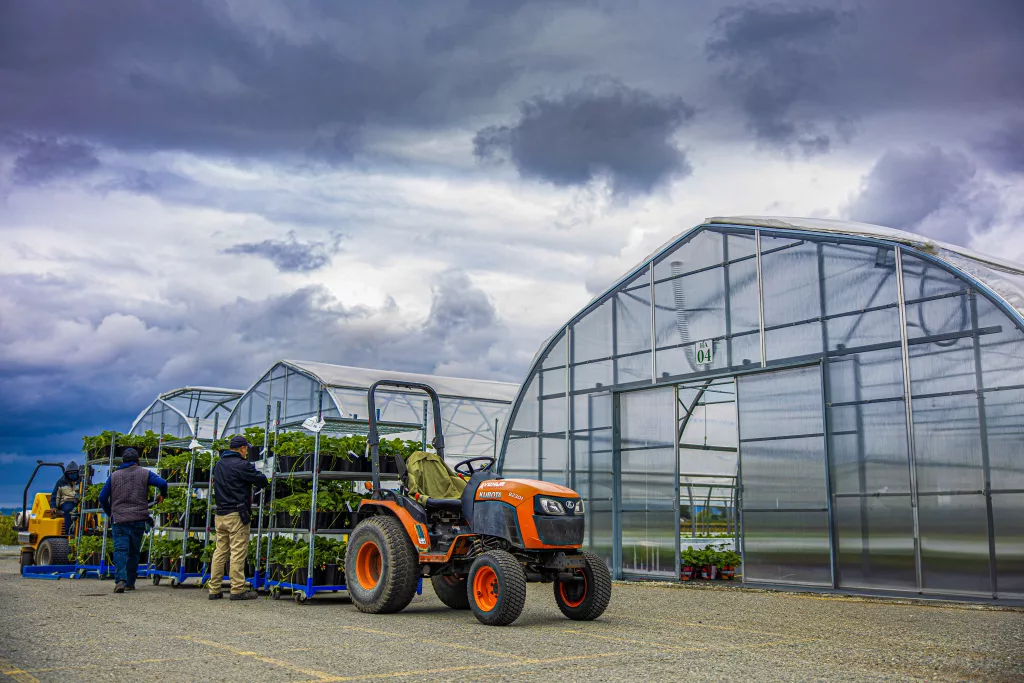
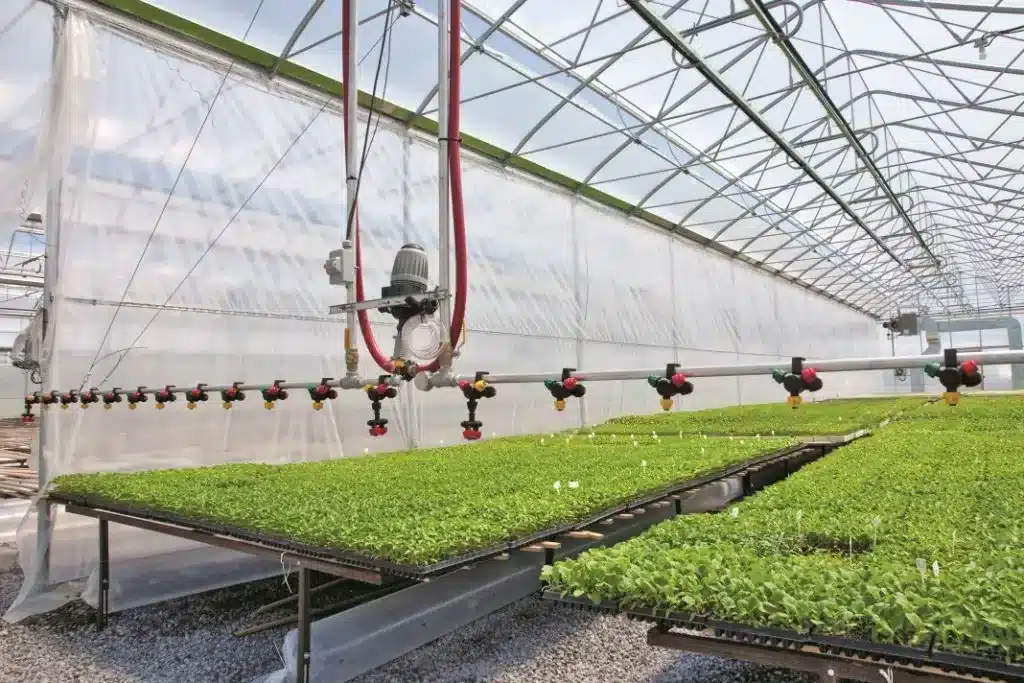
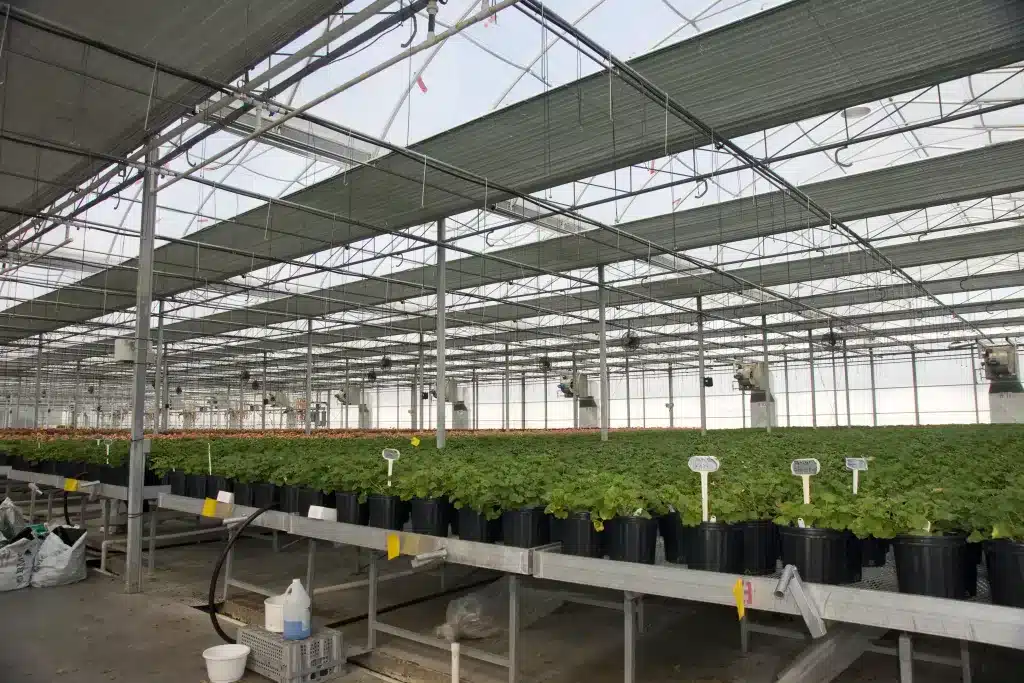
This transition is not about abandoning technology. It is about deploying it smarter. At Harnois, every greenhouse structure — from high tunnel systems to gutter-connected multi-span greenhouses — is designed to integrate seamlessly with advanced equipment and climate controls, giving greenhouse growers the best of both worlds.
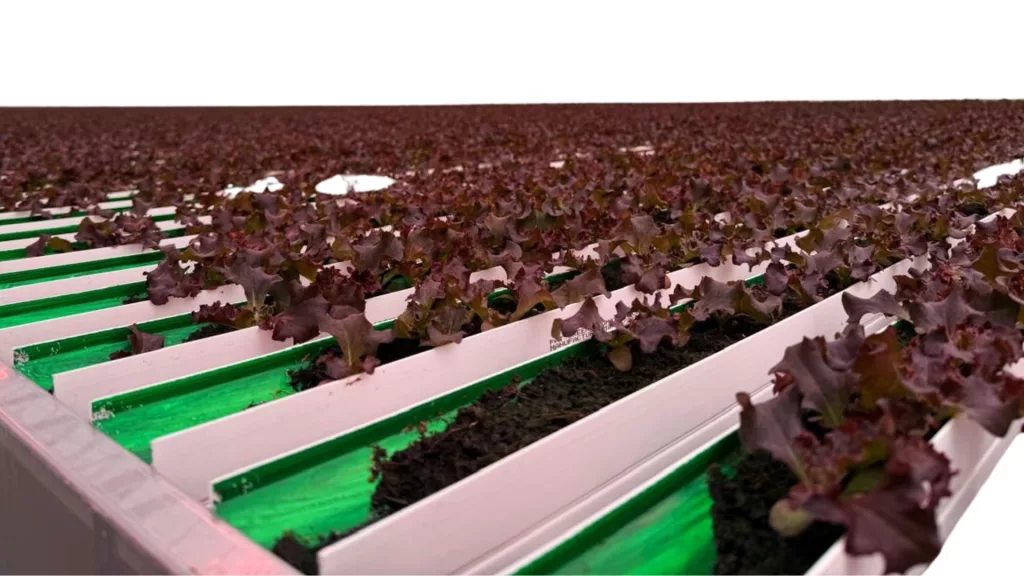
The Future of CEA Greenhouse Technology
Felix and Dr. Greenhouse explored the innovations redefining what is possible inside a CEA greenhouse structure. Three major forces are reshaping the greenhouse sector right now:
AI-driven climate management. Modern greenhouse operations no longer rely on manual adjustments. AI-powered micro-climate systems continuously monitor temperature, humidity, CO₂ levels, and light to maintain optimal growing conditions with minimal human intervention. Harnois integrates these advanced greenhouse control systems across its product line to maximize predictability for professional growers.
New plant sciences. Advances in genetics and cultivation protocols are unlocking new crop varieties specifically optimized for CEA greenhouse production, opening revenue streams that were not viable just five years ago.
Evolving business models. From vertical integration to agri-food partnerships, the CEA greenhouse sector is attracting a new generation of investors and operators who see controlled environment agriculture as a strategic food security asset — not just an agricultural niche.
Energy Efficiency: The CEA Greenhouse Industry’s Top Priority
If there was one theme that ran through the entire conversation, it was energy. Energy efficiency is no longer a nice-to-have for greenhouse operators — it is a business-critical requirement that defines which operations survive and which ones don’t.
Felix discussed several practical strategies greenhouse growers are adopting right now: better thermal screen management, heat recovery systems, optimized greenhouse climate control technology, and the integration of renewable energy sources such as geothermal and solar. The goal in every greenhouse project is the same — grow more, consume less.
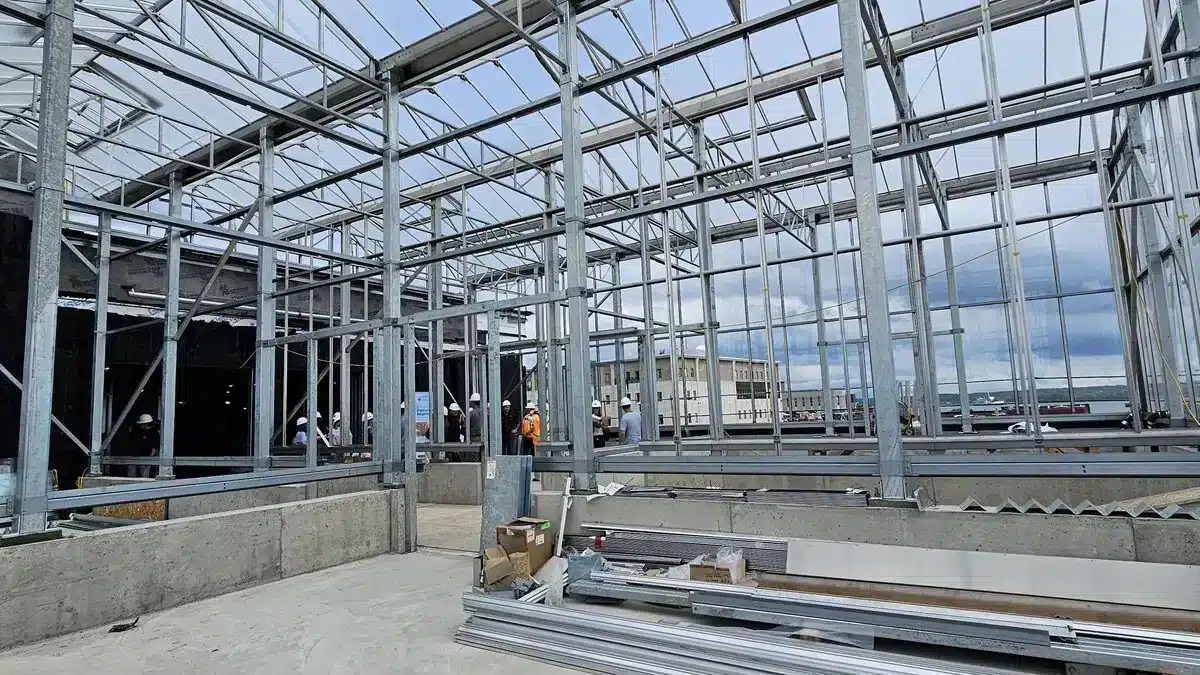
This is precisely the challenge that shaped the development of the Vermax glass greenhouse at Harnois. Engineered around Nearly Zero Energy Building (NZEB) principles, this greenhouse achieves a peak coefficient of performance (COP) of up to 7.5 and targets a 70% reduction in greenhouse gas emissions compared to conventional glass structures. It is the most energy-efficient greenhouse structure currently available in North America.
Vermax Glass: The CEA Greenhouse That Redefines Light and Sustainability
The Vermax glass greenhouse was one of the most discussed innovations during Felix’s conversation with Dr. Greenhouse — and for good reason.
Conventional glass structures force greenhouse operators to choose between energy efficiency and light transmission. Vermax eliminates that tradeoff. With 98% light transmission, smart diffuse glass technology, a semi-closed CEA greenhouse concept, and a circular water management system that targets zero wastewater, Vermax represents a genuine step-change for high-value crop producers.
Harnois is the only Canadian manufacturer to design and produce glass greenhouse structures entirely in-house — a distinction that directly translates into tighter quality control, better engineering fit for North American climates, and a faster response when greenhouse growers need support.
AI, Nutrients, and the Next Frontier in CEA Greenhouse Growing
Felix and Dr. Greenhouse also touched on the frontier applications arriving in greenhouse operations: AI-assisted plant health monitoring that can detect stress signals before they become visible to the human eye, precision nutrient delivery systems that eliminate waste, and sensor networks that give greenhouse growers real-time visibility into every corner of their operation.
These CEA greenhouse technologies are no longer theoretical. They are being deployed today in advanced operations — and they are becoming more accessible every growing season. For operators planning their next freestanding greenhouse or large-scale multi-span facility, integrating these tools from the design phase delivers the best return.
Growing Smarter Starts with the Right CEA Greenhouse Structure
The conversation between Felix Chassouant and Dr. Greenhouse at Indoor Ag-Con 2024 was a clear reflection of where the CEA greenhouse industry is heading: toward smarter energy use, deeper technology integration, and a growing recognition that the commercial CEA greenhouse — not the indoor vertical farm — is the most viable path to large-scale sustainable food production.
If you are planning a CEA greenhouse project or evaluating your current operation’s efficiency, the Harnois team is ready to help. We work with growers at every scale, from freestanding single-bay structures to multi-hectare turnkey CEA greenhouse complexes — always with the goal of building a greenhouse that performs for your crops, your climate, and your bottom line.
Request a quote from Harnois Greenhouses →