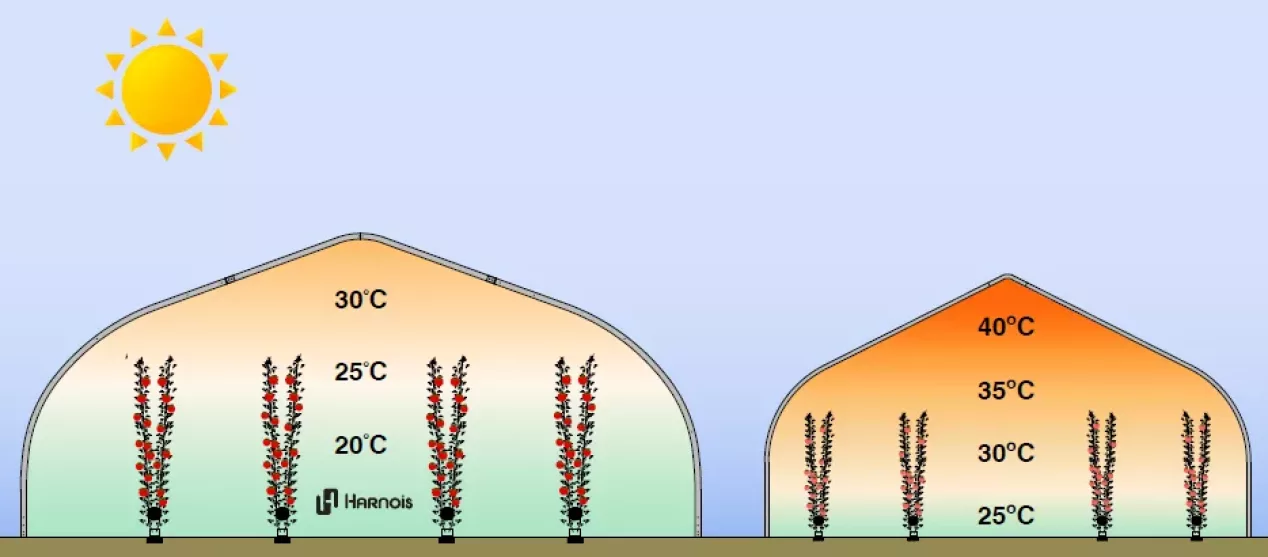
The greenhouse thermal buffer effect is one of the most powerful — and often underestimated — advantages of protected agriculture. By acting as a thermal buffer between the external environment and the crop canopy, a well-designed greenhouse continuously moderates temperature fluctuations throughout the day and across seasons. This stabilizing effect directly maximizes the plant’s photosynthetic yield, creating the foundation for consistent, high-quality production. Understanding how the greenhouse thermal buffer effect works — and how to leverage it — is essential for any commercial grower looking to improve both output and operational efficiency.
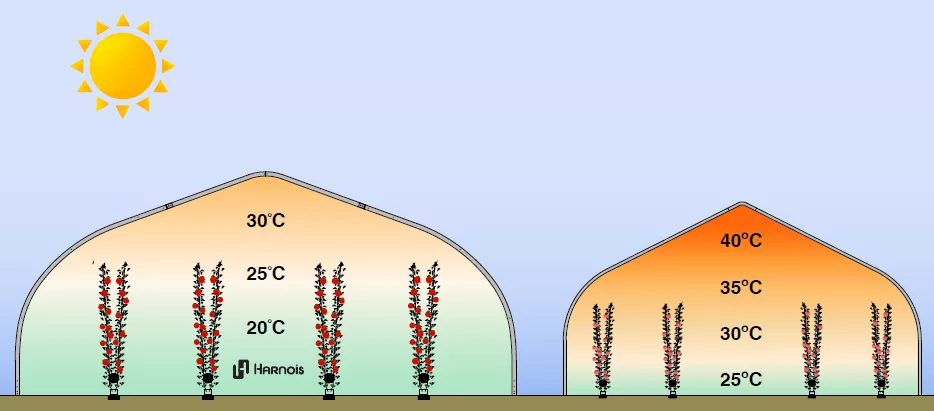
How the Greenhouse Thermal Buffer Effect Works
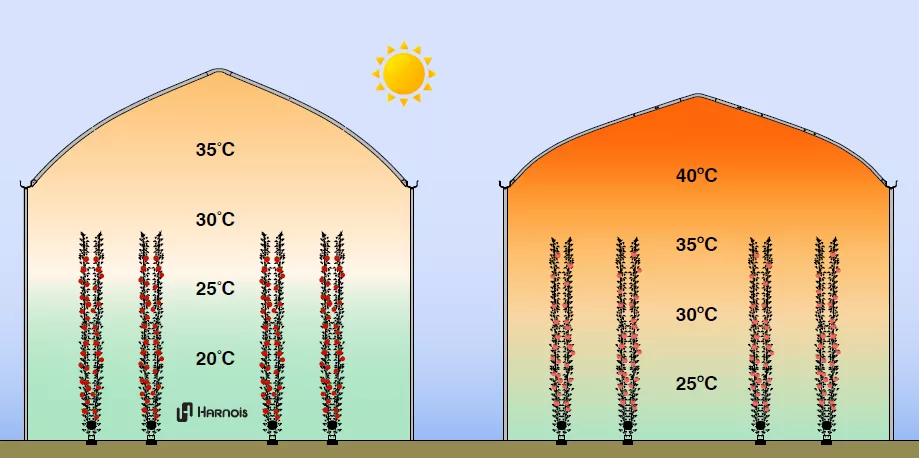
The core principle behind the greenhouse thermal buffer effect is simple: the structure captures solar radiation during the day, stores heat energy within its mass and air volume, and releases it gradually during cooler periods. This thermal inertia prevents the sharp temperature drops that occur in open-field growing, particularly during nights or overcast days. The result is a microclimate where temperatures remain within the optimal range for photosynthesis and nutrient uptake — the two pillars of crop performance. Modern greenhouse designs, such as gutter-connected structures with large air volumes, amplify this buffering capacity by increasing the thermal mass available to the growing environment.
Advanced Climate Management
Beyond basic temperature regulation, the greenhouse thermal buffer effect plays a pivotal role in sophisticated climate management strategies. It provides the environmental stability required for automated climate control systems to function at their full potential — fine-tuning humidity, CO₂ levels, and ventilation with precision that would be impossible in an unstable environment. This precision supports the cultivation of sensitive or high-value crops that demand exacting conditions, from premium tomatoes and cucumbers to ornamental and cannabis production. The buffering effect essentially becomes the foundation on which every other climate technology is built, multiplying the return on investment of each system installed.
Empowering Crop Health
The greenhouse thermal buffer effect also mediates biotic stress on crops. Abrupt environmental shifts — sudden cold snaps, rapid humidity spikes, or heat peaks — trigger measurable stress responses in plants: stomatal closure, reduced transpiration, elevated ethylene production. These responses divert energy away from growth and toward survival, resulting in stunted development, lower yields, and increased susceptibility to fungal diseases like botrytis and powdery mildew. By moderating these fluctuations, the buffering mechanism keeps crops in an active, productive growth state. This reduces the need for chemical interventions and supports more organic, sustainable growing practices — a growing priority for modern commercial operations.
Profitability and Environmental Impact
From a business perspective, the greenhouse thermal buffer effect directly improves the economics of production. A stable internal climate means more predictable crop cycles, fewer losses from environmental stress, and better resource planning. Energy consumption is reduced because the structure itself does part of the climate regulation work, lowering heating and cooling loads. For operations in cold climates — such as Canada — this translates into significant savings on heating fuel costs over a full growing season. At the same time, lower energy consumption means reduced carbon emissions, creating a genuine alignment between profitability and environmental responsibility. This dual benefit is increasingly important as commercial growers face both rising energy costs and growing sustainability expectations from buyers and retailers.
Greenhouse Thermal Buffer Effect and Climate Change Resilience
Looking toward the future, the greenhouse thermal buffer effect becomes even more strategically important in the context of climate change. As external conditions grow more volatile — with more frequent heat waves, unseasonal frosts, and unpredictable precipitation — the ability of a commercial greenhouse structure to maintain a stable internal environment becomes a competitive advantage, not just an agronomic benefit. Growers who invest in structures with strong thermal buffering capacity are effectively future-proofing their operations against climate uncertainty, protecting their yields when open-field competitors face losses.
Conclusion
The greenhouse thermal buffer effect is far more than a passive characteristic of greenhouse design — it is an active, measurable driver of agronomic performance, operational efficiency, and long-term sustainability. From stabilizing photosynthesis to reducing energy costs and building resilience against shifting climate patterns, this buffering mechanism underpins every aspect of successful commercial greenhouse production. At Harnois, our greenhouse structures and equipment are engineered specifically to maximize this effect — giving professional growers the predictability and performance they need to build a profitable, future-ready operation.
FAQ — Greenhouse Thermal Buffer Effect
What is the greenhouse thermal buffer effect? The greenhouse thermal buffer effect is the structure’s ability to absorb, store, and gradually release heat energy, moderating temperature swings between day and night. This creates a stable microclimate that keeps crops within their optimal growth range year-round.
How does this buffering effect improve crop yield? By preventing abrupt temperature fluctuations, the buffering effect minimizes plant stress responses, allowing crops to maintain active photosynthesis and nutrient uptake. The result is higher yield consistency, better fruit quality, and fewer disease-related losses.
Does it reduce energy costs for commercial growers? Yes. A naturally stable internal climate requires less active heating or cooling to compensate for external swings, directly lowering energy consumption — particularly valuable in northern climates with cold winters.
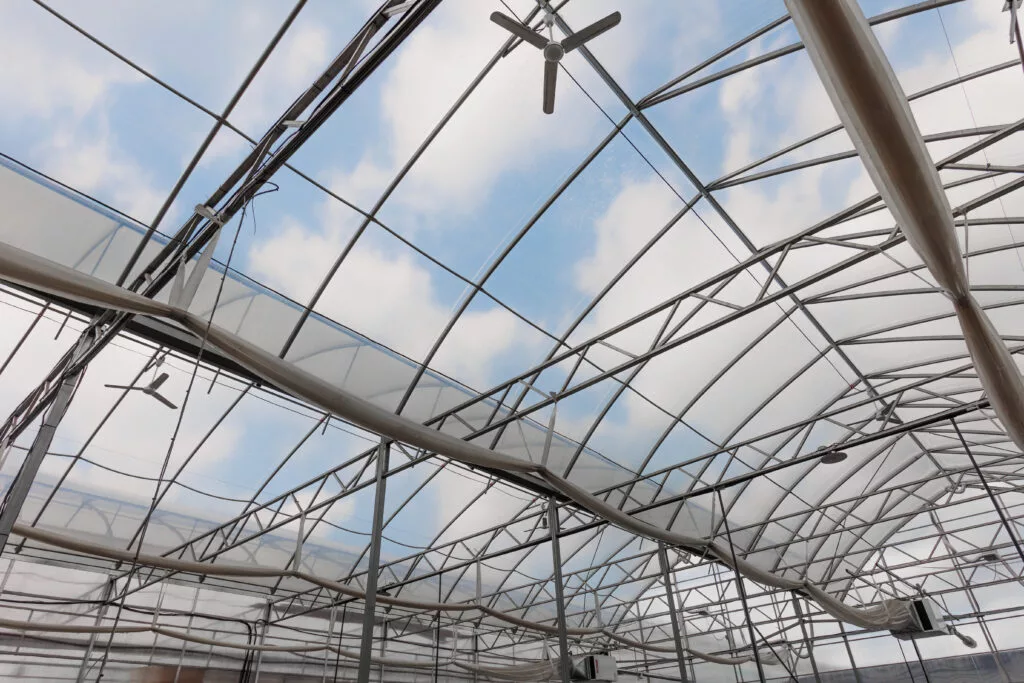
Which Harnois structures offer the strongest thermal buffering? Gutter-connected greenhouses and glass greenhouse structures like the Vermax provide the highest thermal buffering capacity due to their large air volume, advanced screen systems, and high-performance covering materials.