

Before building a greenhouse, every grower must answer a series of critical questions. Whether you’re planning your first commercial structure or expanding an existing operation, these 7 essential questions will help you avoid costly mistakes and set your greenhouse farming project up for long-term success. Our experts at Harnois Greenhouses have guided hundreds of growers through this process — here is what you need to know before breaking ground.
Every construction project starts with a business plan. At this stage, the entrepreneur can determine a realistic budget and invest it wisely. A grower starting their first greenhouse crop might choose a manual management approach and opt for a slightly smaller greenhouse to save money in the first year.
If everything goes well the following year, they can gradually automate and expand it section by section, thanks to the innovative modular design of Harnois greenhouse structures. Building a greenhouse doesn’t have to happen all at once — a phased approach is often the smartest financial decision for new growers.
management approach and opt for a smaller structure to reduce upfront costs. If the first season goes well, they can gradually automate operations and expand section by section. This modular approach is one of the key advantages of Harnois greenhouse structures, which are designed to grow with your business.
Key considerations: equipment, foundations, energy connections, labor, and contingency (typically 10–15% of total budget).
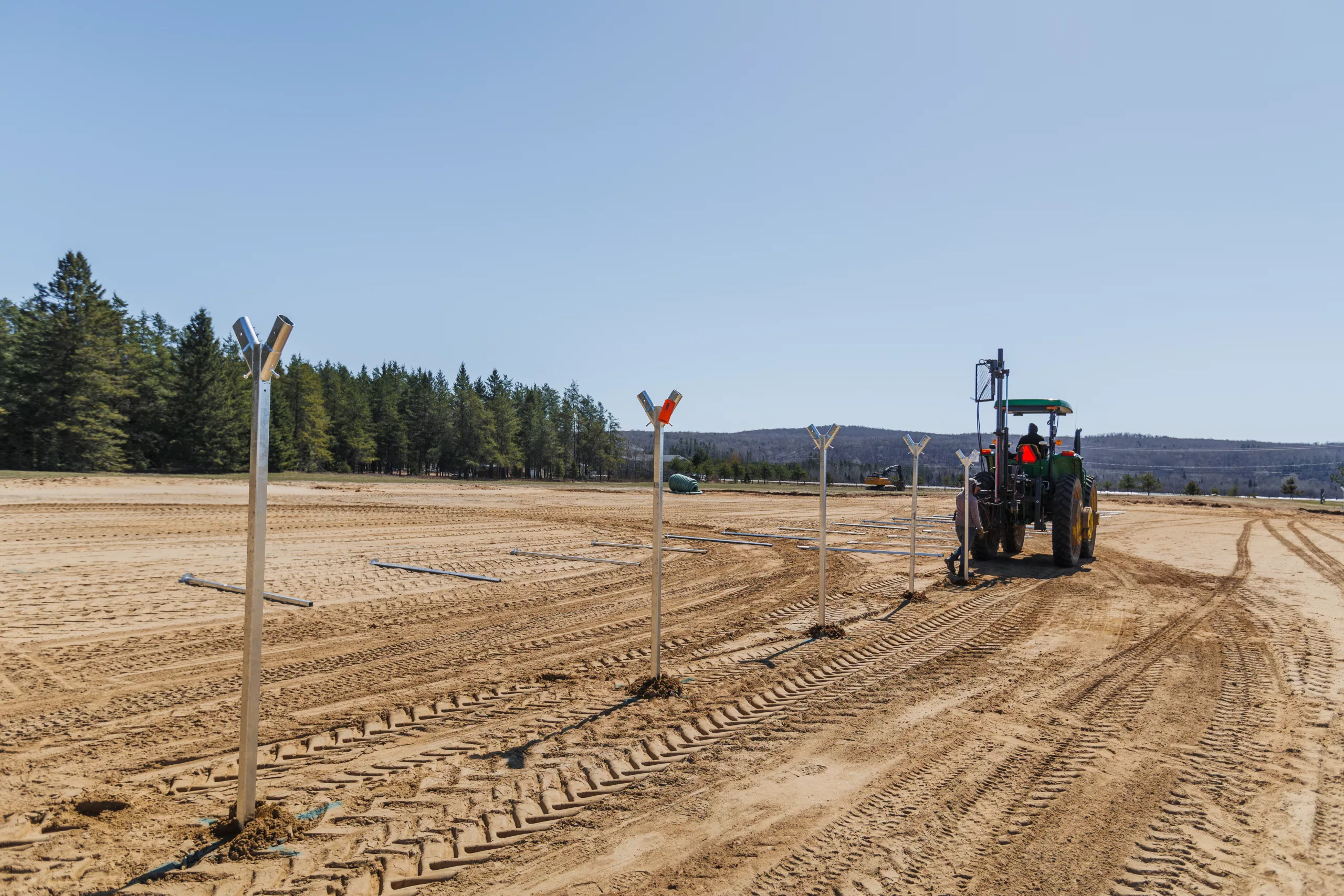
Soil composition affects both crop production and construction costs when building a greenhouse on your land. The land may require specific foundations, which could incur additional expenses. Some soils allow growers to install an individual greenhouse using anchors without traditional foundations.
To avoid unpleasant surprises, the entrepreneur must know the type of soil before purchasing their land. A geotechnical analysis is strongly recommended before committing to any site — this single step can save tens of thousands of dollars in unexpected foundation work. Depending on your soil profile, an Ovaltech or Luminosa structure may be better suited to your site conditions.
Water supply is essential for crop production. A lack of capacity limits the long-term development of the business. Water quality should also be considered, as it influences the choice of equipment used to treat and condition the water.
Energy access is equally a key factor when building a greenhouse in a rural or remote area. Ensure that electrical input, natural gas, or biomass supply is close to the production site to avoid limiting future business development. Most low-tech greenhouses evolve into medium or high-tech operations, which require significant and consistent energy inputs.
The greenhouse must be installed on an open plot of land to naturally create airflow inside the structure. The orientation of the greenhouse has a significant impact on the duration of exposure to natural light.
The entrepreneur should choose a plot that receives the maximum sunlight possible to ensure high productivity for their crops. For gutter-connected structures, a north-south orientation generally maximizes light distribution throughout the day. Avoid sites with tall trees, buildings, or hills that cast prolonged shadows during the growing season.
A greenhouse exposed to very cold winter temperatures must be adapted accordingly. It is often partially insulated and equipped with a heating and lighting system to protect crops year-round.
Understanding your production calendar allows you to size your heating, lighting, and ventilation systems correctly from the start. A year-round operation has fundamentally different infrastructure requirements than a seasonal one — and this decision directly impacts your construction budget and return on investment.
Market research allows the entrepreneur to choose their crop wisely. For example, tomato production might pose a greater challenge for small producers since the market is dominated by large-scale growers. If the selling price is not competitive, consider a less popular or niche crop — such as herbs, microgreens, or a specific variety of cucumbers.
The crop also determines the type of greenhouse building you need. Some crops require high-clearance gutter-connected structures for maximum growing volume, while others perform well in smaller freestanding units. Your crop selection should be confirmed before any structural design work begins.
The grower must assess the availability of labor, as a shortage could significantly harm the business. The size of the greenhouse directly affects the number of employees needed at peak production periods.
The entrepreneur must be able to find qualified labor nearby — or plan for automation systems that reduce dependency on manual labor. As your operation scales, access to trained greenhouse technicians and seasonal harvest workers becomes a critical operational factor.
Building a greenhouse is only the beginning — operating it profitably requires skilled, reliable labor. A shortage of workers can significantly harm production and business growth.
The size of the greenhouse directly determines the number of employees needed. A larger, more automated facility reduces labor dependency, but still requires trained operators. Assess labor availability in your area before committing to a specific scale or automation level. Harnois greenhouse systems are designed to streamline daily tasks and maximize labor efficiency across all operation sizes.
Your Greenhouse Project Starts With the Right Questions
These 7 questions are the essential checklist for building a greenhouse that performs from day one. Answering them thoroughly before you break ground will save you time, money, and stress throughout the life of your operation.
Our experts at Harnois Greenhouses will then help you find the answers you’re missing in order to build a structure that meets your climate, crop, and business requirements. Ready to take the next step? Contact our greenhouse experts today to receive a personalized project assessment.
Now that you know what to ask, discover how to choose the perfect greenhouse model for your crops — explore the full Harnois product range.