
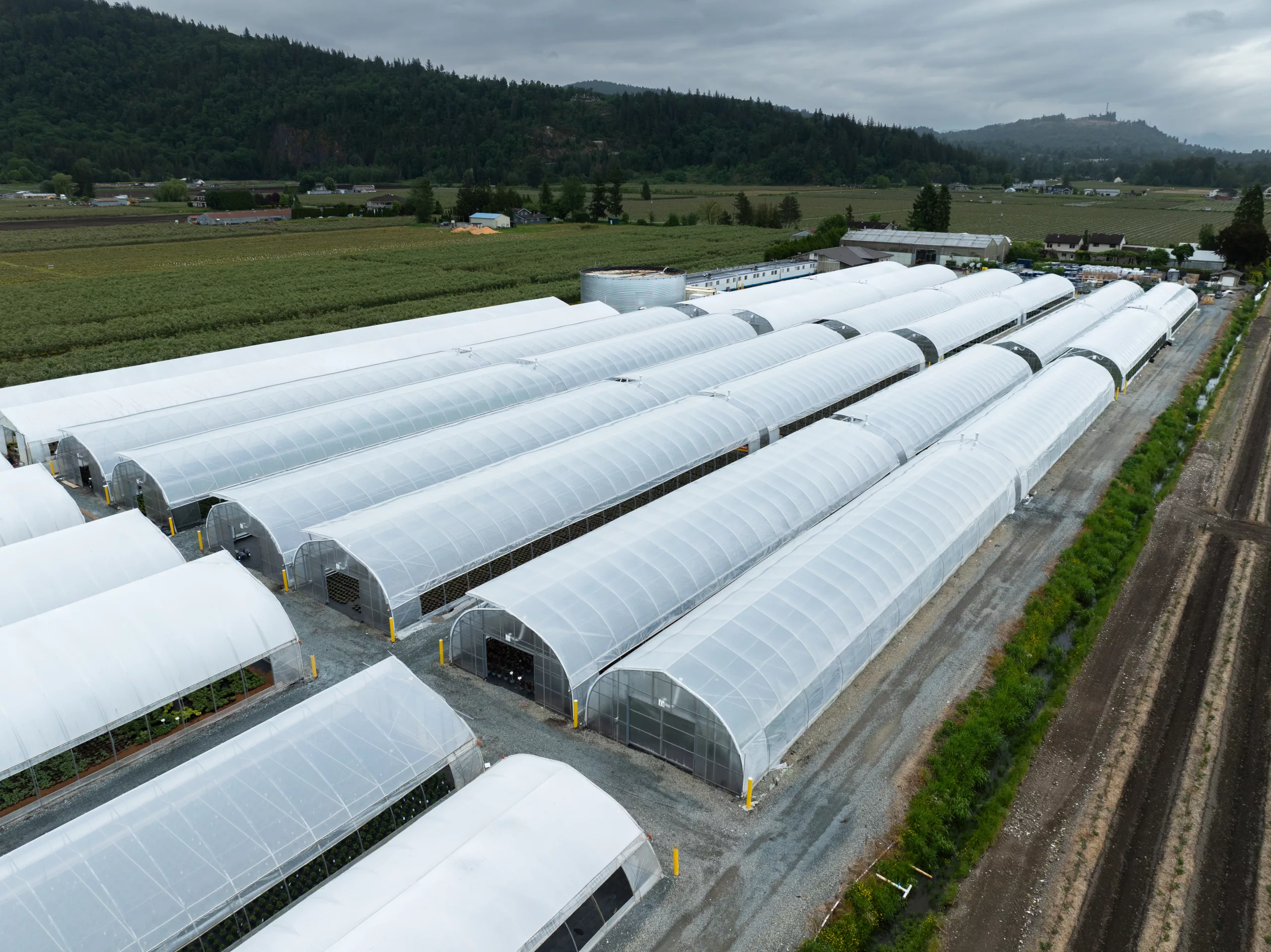

In commercial agriculture, durability is not only a structural benefit. It is a financial strategy. A greenhouse that remains operational, aligned, corrosion-resistant, and stable for decades produces a significantly higher return on investment than structures that require frequent reinforcement or early replacement.
Harnois greenhouses are widely recognized in North America for combining engineering strength with long-term economic performance. When compared generically to other greenhouse brands, the difference shows up not only in mechanical reliability but also in lifecycle cost, depreciation curve, and operational uptime.
Mathieu Lemonnier, a long-time grower, once described Harnois’ durability as comparable to an old Mercedes that refuses to die and that you eventually want to give to your children. This analogy captures the essence of Harnois’ value. The product is engineered to last, maintain its alignment, and deliver predictable performance year after year.
This page presents a neutral, business-focused comparison covering structure, materials, climate performance, longevity, and ROI.
Structural Engineering and Its Impact on Capital Investment
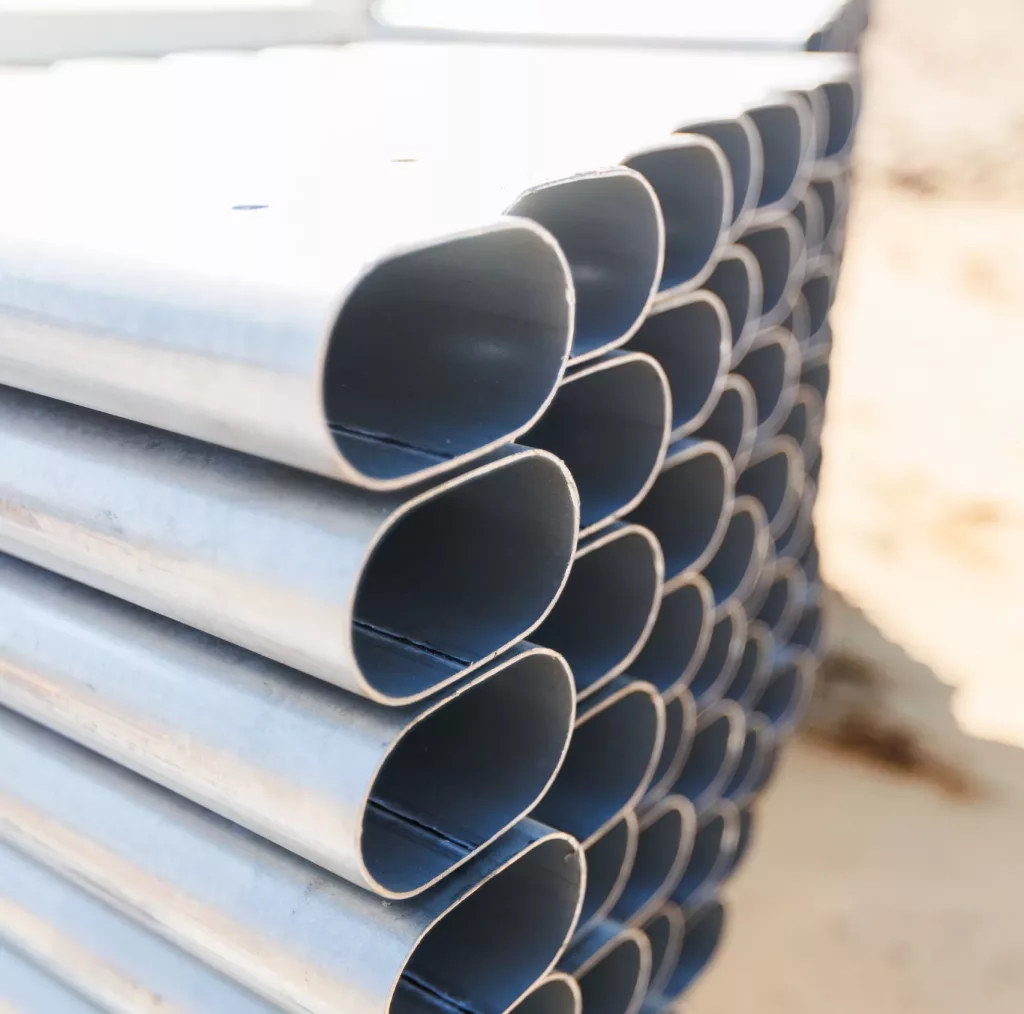
Most commercial greenhouse manufacturer build with round or square tubing. These shapes are inexpensive to produce but offer limited strength in high-load environments. Harnois is one of the few commercial manufacturers in North America to use engineered oval tubes for primary arches.
Why the tube shape affects ROI
Tube geometry directly influences:
- deformation under snow load
- tension loss over time
- poly film wear
- long-term corrosion behavior
- need for mid-life structural reinforcement
When a structure deforms, operational costs increase. Retensioning, corrective bracing, and partial rebuilds all reduce ROI.
Oval Tube Engineering
Harnois oval tubing provides:
- higher bending resistance in the vertical axis
- lower long-term deformation
- safer drilling through the neutral axis for accessories
- improved aerodynamics and less wind pressure
- less polyethylene wear due to wider contact surface
Round tubing deforms more quickly and cannot be drilled safely. Square tubing performs moderately but tends to create stress points on cladding and has lower aerodynamic performance.
Business interpretation
Structures that maintain their geometry for decades provide a stronger base for heating optimization, automation, environmental control systems, and long-term operational planning. A greenhouse that holds its shape retains its asset value.
Cold-Climate Performance and Risk Mitigation
Northern growers must account for snow accumulation, ice loads, freeze-thaw cycles, and strong winds. Many greenhouses on the market were designed for moderate European or temperate climates. They work well during installation but deteriorate over repeated winters.
Harnois Greenhouses are engineered for Canada and the northern United States. Their geometry, steel gauge, and anchoring systems were developed around heavy structural loads and long, cold seasons.
Key Differences
Harnois provides:
- optimized arch spacing for persistent snow conditions
- climate-adapted Gothic and Luminosa profiles designed to shed snow quickly
- stronger anchoring that resists frost heave and wind uplift
- predictable behavior in low temperatures, which reduces emergency interventions
Material Quality and Its Effect on Depreciation
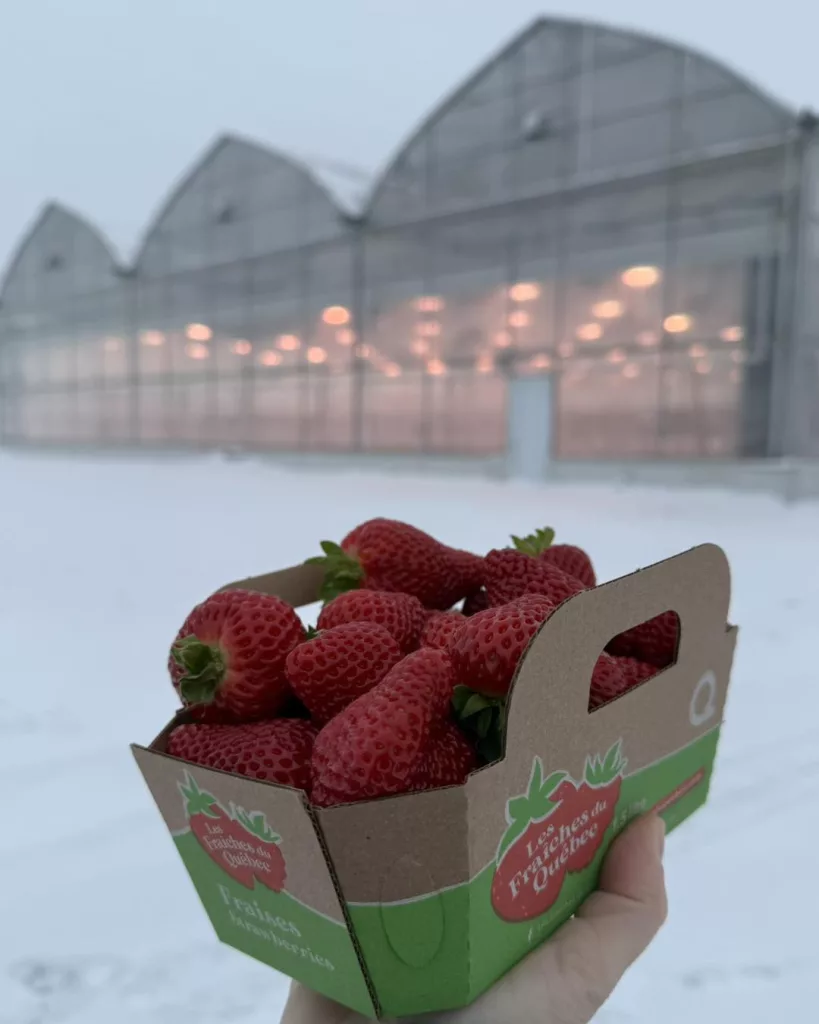
Durability depends not only on engineering but also on material consistency. Harnois uses high-gauge galvanized steel and adheres to controlled fabrication standards. Lower-cost greenhouse manufacturers often use thinner-wall tubing, inconsistent galvanization, or imported steel with variable quality.
Key Material Differences
| Wall thickness | Higher and consistent | Variable |
| Fabrication quality | Precision-formed oval tubes | Standard round or square |
| Zinc coating | Uniform and high-grade | Inconsistent or thin |
| Corrosion progression | Slow and predictable | Faster, often at weld points |
Business interpretation
Durable commercial greenhouse structures built with inconsistent materials depreciate quickly. They lose resale value and often require early replacement, thereby compressing the investment’s return period. A Harnois steel frame retains structural value for decades. This is the financial equivalent of owning an asset that refuses to degrade, like the Mercedes analogy.
Neutral Axis Drilling and Long-Term Flexibility
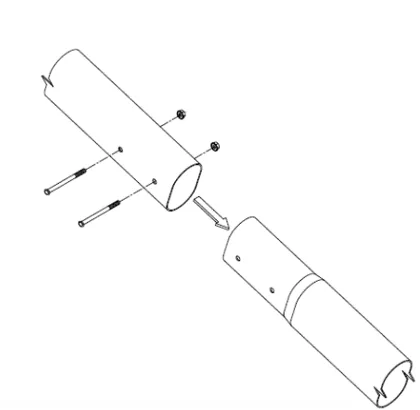
Most greenhouse frames cannot be drilled without weakening the arch. This limits the installation of accessories and forces growers to rely on clamps, straps, or external bracketing.
Harnois oval tubes allow drilling along the neutral axis, where stress is minimal.
Benefits
• safe installation of automation lines, lighting, crop supports, and sensors
• simplified retrofits
• reduced long-term maintenance labor
• no structural penalty for modernization
• simplified retrofits
• reduced long-term maintenance labor
• no structural penalty for modernization
Business interpretation
A greenhouse that easily accepts upgrades protects capital value and reduces the lifecycle cost of modernization. This flexibility supports long-term competitive advantage for growers using year-over-year automation improvements.
Large-Scale Structural Efficiency
Luminosa represents Harnois’ highest-efficiency structure, used for high-tech, year-round production. It combines large spans with superior load distribution.
Key Durability Features
• wider bays with minimal deformation
• enhanced light uniformity during low-angle winter sun
• reinforced connectors that distribute load evenly
• reduced film wear due to smoother arch geometry
• longer heating efficiency due to consistent internal volume
• enhanced light uniformity during low-angle winter sun
• reinforced connectors that distribute load evenly
• reduced film wear due to smoother arch geometry
• longer heating efficiency due to consistent internal volume
Business interpretation
Structures that maintain tension and alignment reduce energy waste, extend film life and support predictable yield cycles. These operational efficiencies compound over decades.
Lifespan Expectation and Multi-Generational Value
Harnois structures often remain operational for 20 to 40 years or more. Many growers still operate Harnois frames installed in the 1990s.
Mathieu Lemonnier describes Harnois greenhouses as the Mercedes you end up giving to your kids because it simply refuses to die. This analogy is accurate. The structure holds alignment, resists corrosion, and remains dependable.
Comparative Lifespan Expectations
| Harnois oval-tube frame | 20 to 40+ years |
| Domestic round-tube frame | 10 to 20 years |
| Lightweight imported frame | 6 to 12 years |
Operational Performance and Cost Stability
Durable commercial greenhouse structures reduce unplanned expenses. Harnois users often report:
- fewer repairs after storms
- minimal deformation after heavy winters
- low rates of corrosion
- stable film tension
- improved heating performance due to consistent geometry
- predictable maintenance schedules
Business interpretation
Cost stability improves financial planning and protects margins. Growers with stable infrastructure are better positioned to scale or reinvest profitably.
ROI Comparison
Below is a high-level, business-focused comparison centered on lifecycle economics rather than structural details.
| Upfront cost | Moderate | Low to moderate |
| Structural lifespan | Very long | Moderate |
| Maintenance frequency | Low | Medium to high |
| Storm and snow resilience | High | Medium |
| Downtime risk | Low | Medium |
| Compatibility with automation | High | Medium |
| Depreciation curve | Slow | Fast |
| Replacement cycle | 20 to 40 years | 8 to 20 years |
| Total cost of ownership | Low over time | Higher over time |
Business interpretation
Harnois structures require a higher initial investment than some mid-range or imported alternatives, but the ROI improves significantly over the lifespan as maintenance, downtime, and replacement intervals are minimized. Over 20 to 40 years, Harnois offers one of the lowest cost-per-year ownership models in the commercial greenhouse sector.
Summary for Decision Makers
Harnois delivers durability that produces real financial outcomes.
- The structure lasts significantly longer than typical competitor frames.
- Stability reduces energy waste and risk of crop loss.
- Material quality protects long-term asset value.
- Engineering supports modernization and automation.
- Operational uptime remains high with minimal intervention.
- The depreciation curve is slow, which strengthens overall ROI.
This is why experienced growers compare Harnois to the old Mercedes that never dies. The product continues to perform well long after others reach the end of their life cycle.
A greenhouse is not a short-term purchase. It is a long-term infrastructure asset that must perform predictably in all seasons. When durability, lifecycle cost, risk mitigation, and long-term ROI are evaluated objectively, Harnois consistently positions itself at the top of the market.
For growers who plan decades ahead, need stable performance in northern climates, and want an asset that retains value long after the initial investment, Harnois is a strategic choice with a proven financial advantage.