

Inspecting your greenhouse polyethylene at every change of season is one of the most important maintenance steps a grower can take. A small crack left unrepaired can become a large tear after the next wind event — costing you far more in emergency replacement than a 10-minute inspection would have.
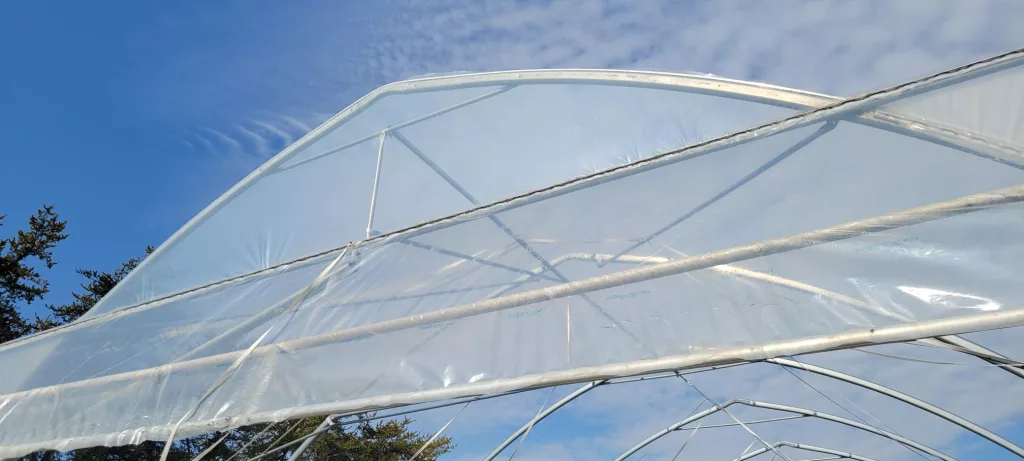
If your region has recently experienced high winds, ice, hail, or heavy snowfall, inspect your greenhouse polyethylene immediately. Don’t wait for the next scheduled check.
Why Regular Greenhouse Polyethylene Inspection Matters
Your greenhouse polyethylene covering is the first line of defense against the elements. Damage left unattended leads to three cascading problems:
- Heat loss — even a small opening compromises your greenhouse’s thermal efficiency, raising heating costs
- Structural risk — wind can catch a minor tear and propagate it across an entire bay within hours
- Crop exposure — moisture intrusion and temperature swings directly impact yield quality
At Harnois, our greenhouse polyethylene coverings are engineered with UV stabilizers and anti-drip treatments for multi-year lifespan — but only if maintained properly. Learn more about how we design durable commercial greenhouse structures built to withstand North American climate conditions.
How to Inspect Your Greenhouse Polyethylene Covering: Step-by-Step
Step 1 — Visual Check (Outside)
Walk the full perimeter of your greenhouse structure. Look for:
- Visible tears, holes, or punctures in the polyethylene film
- Areas where the covering has separated from the profile or retention system
- Sagging sections that may indicate a compromised double-layer inflation system
- Discoloration or yellowing — a sign of UV degradation accelerating in that zone
Step 2 — Tactile Check (Inside and Outside)
Run your hand slowly along the polyethylene surface on both sides. You’re feeling for:
- Micro-cracks not visible to the eye
- Weak or brittle zones (polyethylene becomes rigid and fragile at end of lifespan)
- Areas where the film feels detached from the underlying layer
Step 3 — Pressure Check (Double-Layer Structures)
For double-layer gutter-connected greenhouses or any structure with an inflated air gap between layers, verify the air damper pressure. A drop in pressure between inspections indicates a leak somewhere in the covering or at a seam junction.
How to Repair Greenhouse Polyethylene: Installation Tips for Repair Adhesive
For minor damage, a repair adhesive applied immediately will extend the life of your greenhouse polyethylene significantly. Here is the correct procedure:
- Prepare the surface — ensure the area is completely clean and dry. Dust, moisture, or residue will prevent the adhesive from bonding correctly.
- Size the patch correctly — cut your adhesive patch to extend at least 5 cm (2 inches) beyond the edge of the damage on all sides. A patch that is too small will peel at the edges under wind pressure.
- Apply on both sides — for double-layer polyethylene, apply the repair adhesive both inside and outside the film. Press firmly and allow adequate bonding time before resuming normal greenhouse operations.
- Monitor the repair — check the patched area during the next 2–3 wind events. If the repair is lifting, a full section replacement may be needed.
Important: If the tear is longer than 30 cm (12 inches), or if the polyethylene is already yellowed and brittle in the affected area, repair adhesive is a temporary fix only. Plan a full covering replacement before the next heating season.
When to Replace Your Greenhouse Polyethylene
Most commercial greenhouse polyethylene films are rated for 4 to 6 years under normal UV exposure and mechanical stress. Signs that replacement is overdue:
- Multiple repaired zones within the same bay
- Visible yellowing across more than 20% of a panel
- Chronic pressure loss in double-layer systems despite no visible damage
- Covering has become stiff and difficult to tension
Harnois offers greenhouse covering replacement services and can advise on the right polyethylene specification for your climate, crop type, and structure model. If you grow soft fruits or open-field crops under a high tunnel, covering integrity is especially critical for season extension.
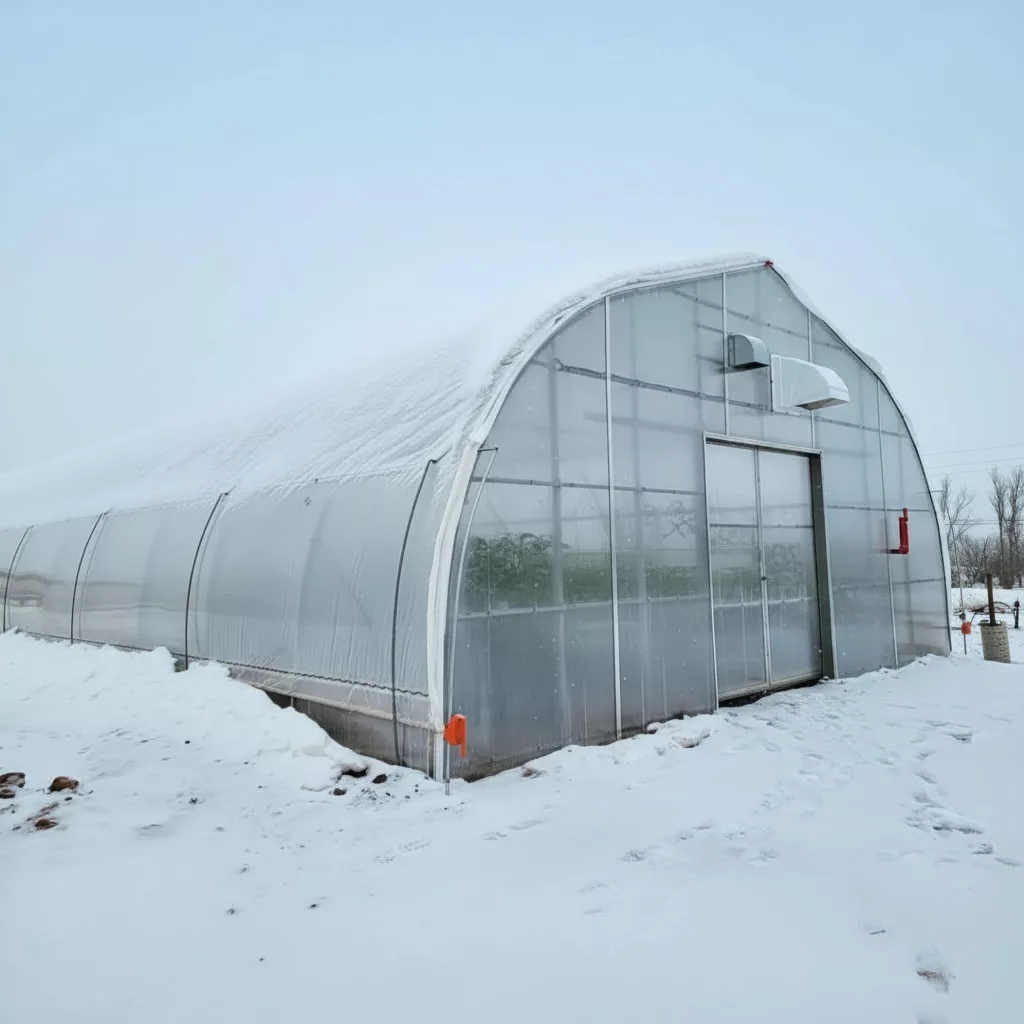
Contact Us for Greenhouse Polyethylene Support
In the event of significant breakage or tears that cannot be repaired with adhesive, contact our team directly. Our experts will assess your situation and recommend the fastest path to restoring your greenhouse covering.
Request support or a covering replacement quote »
Also read: How to Winterize a High Tunnel Greenhouse »
