

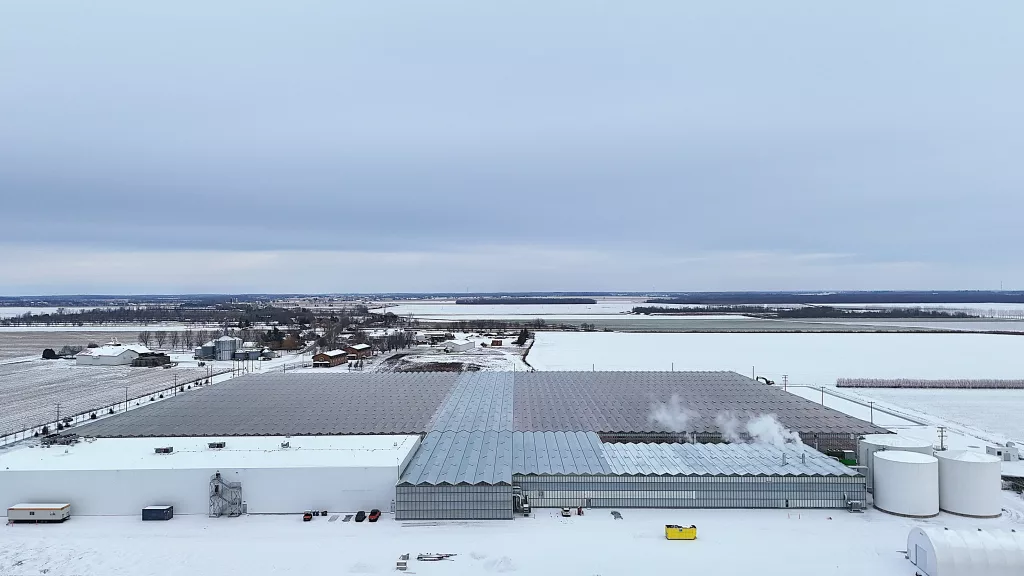
When planning your greenhouse project, one of the first decisions you’ll face is greenhouse orientation — north-south or east-west. At Harnois Greenhouses, one of the leading commercial greenhouse manufacturers in Canada, our experts recommend evaluating this choice carefully. Orientation directly impacts light penetration, ventilation efficiency, and long-term crop productivity.
North-South Greenhouse Orientation
A north-south orientation maximizes light exposure during the winter months when the sun is lower in the sky. This orientation is particularly beneficial at higher latitudes — such as most of Canada — where winter sunlight is limited and every hour of natural light counts.
Key advantages:
- Even light distribution throughout the day
- Reduced internal shadows, promoting uniform plant growth
- Ideal for year-round production in northern climates
However, a north-south orientation may not be ideal in regions with extreme summer heat, as it can lead to excessive solar gain and potential overheating. In those cases, supplemental greenhouse ventilation equipment becomes essential.
East-West Greenhouse Orientation
An east-west orientation captures morning and afternoon sun more effectively, which can be advantageous in regions with hot or temperate climates. By limiting direct midday exposure, this layout helps minimize heat buildup during the hottest part of the day.
Key advantages:
- Cooler growing environment during summer
- Better suited to warm-climate crops
- Effective solar gain management
The main trade-off is uneven light distribution: one side of the greenhouse will consistently receive more direct sunlight than the other. This can be mitigated with reflective interior surfaces or supplemental lighting, depending on your crop type.
Site Layout and Infrastructure Considerations
Beyond sun angle, your greenhouse orientation must align with your overall site layout. Prioritize a central location on your property, close to existing infrastructure — water, electricity, and access roads. This reduces daily travel time, streamlines harvesting logistics, and improves operational efficiency.
Key site factors to plan around:
Expansion space: Leave adequate clearance around the structure for future gutter-connected greenhouse additions or equipment staging areas.
Roads and access: Position the greenhouse to facilitate snow removal, truck maneuvering, and supplier deliveries.
Utilities: Minimize the distance to irrigation water sources and electrical service connections.
Accessibility for Daily Operations
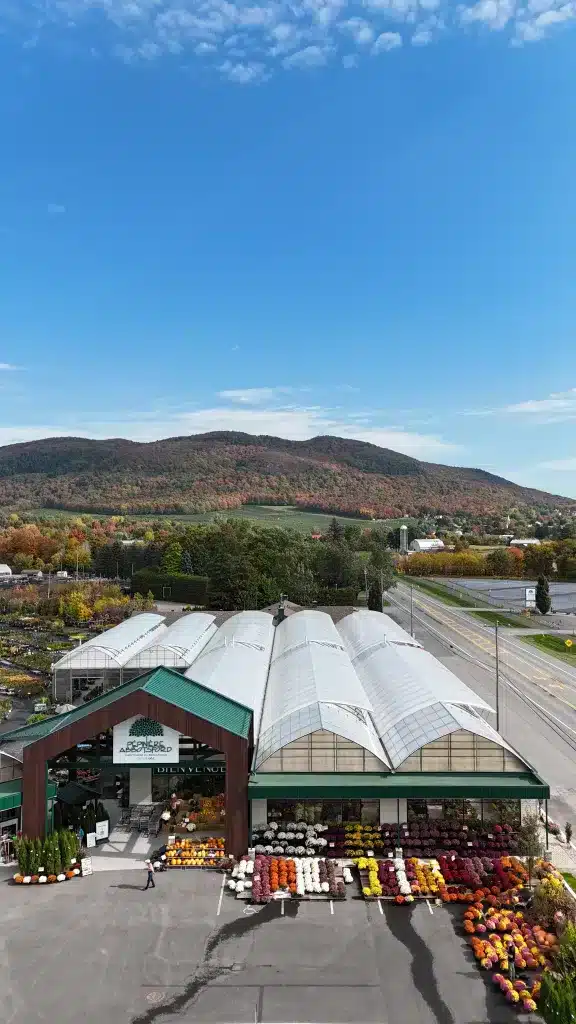
Easy access for maintenance, harvesting, and supply deliveries can save significant time and reduce operational costs over the life of your greenhouse. When choosing your orientation and placement, ensure there is ample space to maneuver forklifts, pallet jacks, and delivery vehicles on all sides of the structure.
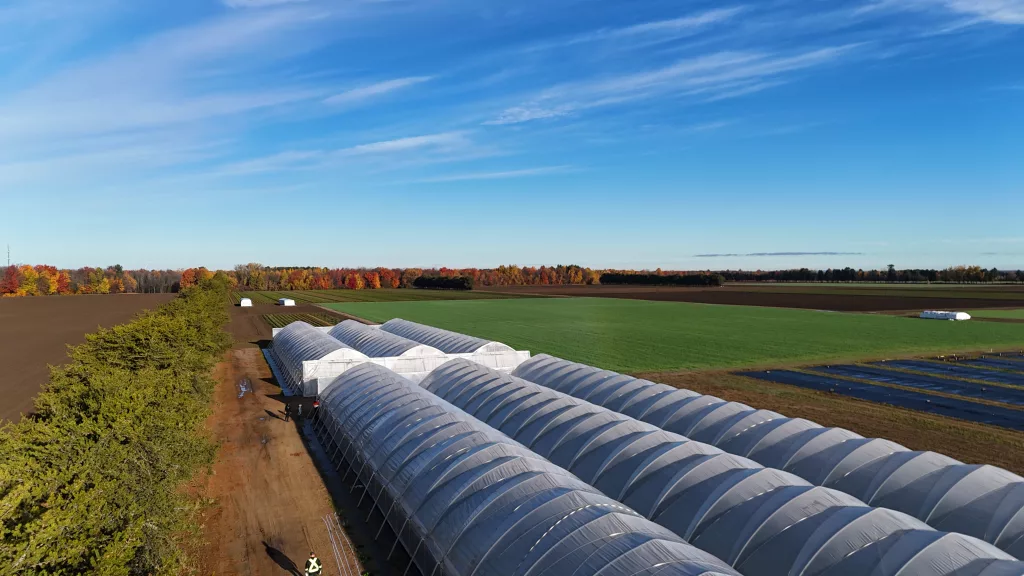
This is especially important for high tunnel greenhouses and large freestanding greenhouse installations where end-wall access is critical for equipment entry and air circulation.
Climate and Environmental Factors
Local climate conditions should always inform your final orientation decision. Before breaking ground, conduct a thorough site assessment that accounts for:
- Prevailing wind direction: Orient the greenhouse to reduce wind load on the widest face of the structure.
- Snow accumulation patterns: Ensure roof pitch and orientation allow for efficient snow shedding, especially relevant for Canadian greenhouse construction.
- Natural shading: Identify nearby trees, buildings, or topographic features that could cast shadows on your growing area during critical light periods.
Consulting with experienced greenhouse professionals early in the planning process will help you avoid costly corrections later.
Conclusion
The orientation and placement of your commercial greenhouse are foundational decisions that shape its performance for decades. By carefully weighing light penetration, heat management, site layout, accessibility, and local climate, you can optimize your investment from day one.
Harnois Greenhouses — a trusted name among greenhouse manufacturers in Canada — offers expert guidance at every stage of your project, from site evaluation to turnkey installation. Request a quote to start planning your greenhouse today.
