

Flower Farming for Profit
Build a profitable flower production business
Flower farming is more than growing beautiful blooms — it’s about building a profitable, scalable business. With the right strategy, infrastructure, and market positioning, flower production can become a highly lucrative agricultural venture.
Whether you are starting a new operation or looking to optimize an existing one, success depends on combining production efficiency, cost control, and strong market demand.
Why flower farming is a growing opportunity
The demand for locally grown flowers continues to increase across North America. Consumers, florists, and event planners are actively seeking:
- Fresh, locally sourced flowers
- Sustainable growing practices
- Unique and seasonal varieties
- This creates a strong opportunity for growers to enter or expand within the market while differentiating their offer.
At the same time, profitability requires more than production — it requires a solid business approach including pricing, planning, and market alignment.
Key factors for a profitable flower farm
1. Market-driven production
Successful flower farms grow based on what sells, not just what grows well.
- Identify your target markets (retail, wholesale, weddings, subscriptions)
- Select varieties aligned with demand
- Plan production based on sales projections
Understanding your market is essential to generating consistent revenue.
2. Cost control and pricing strategy
Profitability depends on your ability to manage costs and price correctly.
- Calculate your cost of production
- Include labor, infrastructure, and inputs
- Set prices that ensure sustainable margins
Many growers underestimate their costs, which directly impacts profitability.
3. Efficient production systems
Optimizing your operations increases both yield and profitability.
- Streamline workflows
- Improve irrigation and climate control
- Reduce manual handling
Efficiency is key to maintaining consistent output while controlling labor costs.
The role of greenhouses in flower profitability
Growing flowers in a controlled environment significantly improves results.
A greenhouse allows you to:
- Extend your growing season
- Protect crops from weather variability
- Improve quality and uniformity
- Increase yield per cycle
Greenhouse production is typically more productive than field cultivation, allowing multiple harvests and higher returns.
Scale your flower business with confidence
Building a profitable flower farm doesn’t happen overnight. A phased approach is often the most effective:
- Start with a manageable production size
- Validate your market
- Optimize operations
- Expand gradually
This approach reduces financial risk while allowing you to refine your processes and maximize profitability.
Ready to grow your flower business?
Whether you are planning a new project or upgrading your current operation, the right infrastructure and strategy make all the difference.
Contact our team to discover how to optimize your flower production and maximize profitability.
Flower Farming for Profit Webinar
Is your flower project sustainable for both the earth and your lifestyle? Join Chloe from the Market Gardener Institute on March 26th for a deep dive into flower farming for profit.
Learn how to align your passion with a solid financial structure.
📍Live on Zoom | March 26th at 12:00 PM (EST)
Register for free:
Who is the Market Gardener Institute?
The Market Gardener Institute offers online courses to help you start and run your own successful small-scale regenerative farm. Together, we can change the world one small farm at a time.
Featured Partner Course with Harnois Greenhouses
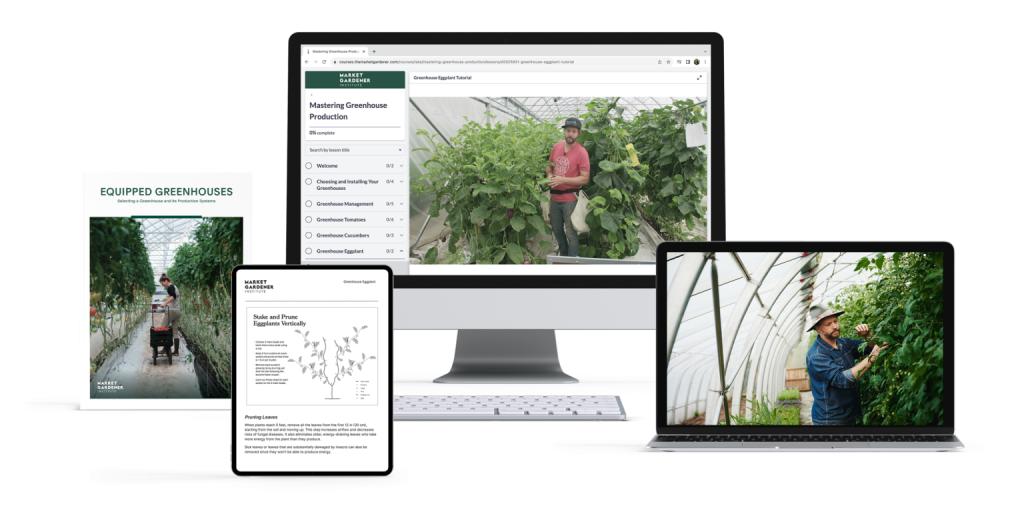
Mastering Greenhouse Production Course
Take your greenhouse production to the next level. This comprehensive course from the Market Gardener Institute covers everything from season extension and climate management to high-density planting systems and year-round profitability, taught by experienced market farmers who’ve done it themselves.
Who is this greenhouse farming course for?
- Committed gardeners who need guidance for their greenhouse project.
- Market gardeners who want to step up their game and improve their understanding of greenhouse systems, fertility, pest management and crop production.
- Established producers who wish to increase the profitability of their greenhouse crops.
