

Running a commercial greenhouse means managing heat and light around the clock. According to a report from Agri-réseau published in 2008, energy represents on average 37% of total operating costs in greenhouse production — a figure that remains accurate today. With heating bills continuing to rise across North America, switching to sustainable energy sources has become a strategic priority for growers looking to protect their margins and reduce their environmental footprint.
You’re probably already familiar with conventional heating options: electricity, natural gas, and propane gas. But geothermal and biomass are two proven clean energy alternatives that can be perfectly adapted to commercial greenhouse production. Here is everything you need to know to evaluate both options and make the right decision for your operation.
You’re probably already familiar with the most popular sources of energy: electricity, natural gas and propane gas. But did you know that there are alternatives? Geothermal and biomass are renewable energies that can be perfectly adapted to your needs.
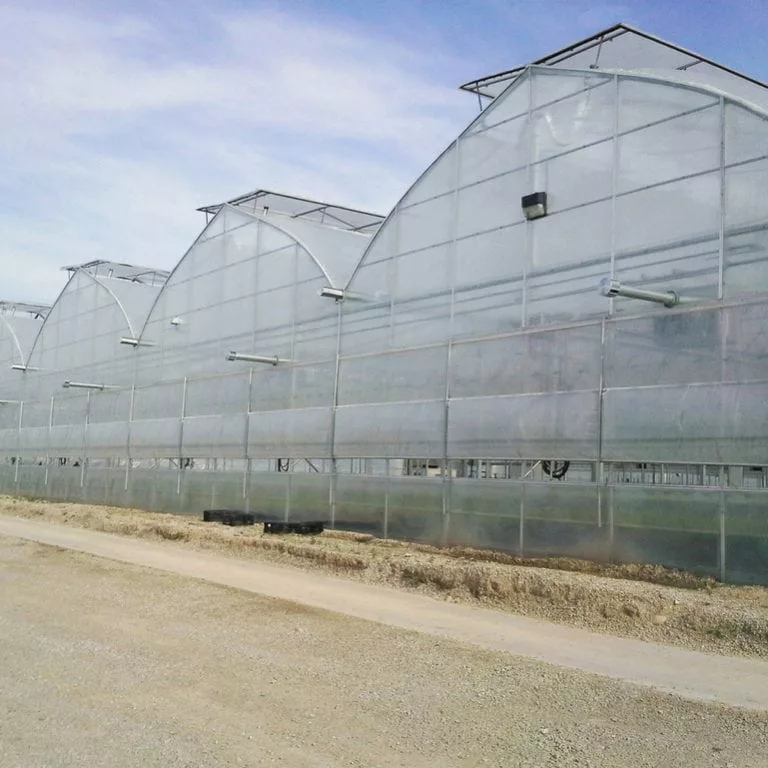
Using geothermal energy for greenhouses
Geothermal systems draw heat from the ground, groundwater, or surface water. A heat pump extracts this heat using a refrigerant fluid circulating through a buried loop — horizontal or vertical. The system transfers that warmth to the greenhouse, providing stable and consistent heating even during the coldest Canadian winters.
Horizontal circuits must be installed below the frost line and typically require a surface area 1.25 to 3 times greater than the space being heated. Vertical circuits are sized based on energy requirements rather than land area, making them better suited to operations with limited outdoor space. Open-loop systems are also an option, drawing water directly from the water table through supply and discharge wells.
One major advantage of geothermal over conventional heat pumps is its low maintenance requirement. Heat pump units have an estimated lifespan of approximately 20 years, while buried pipes can last up to 50 years. Across Quebec and Canada, geothermal heating is already used in agricultural production, with analyses suggesting a cost-recovery period of four to eight years depending on the installation.
Benefits of Geothermal Heating for Greenhouses
- Provides constant, stable heat with no interruption
- A genuinely clean, zero-emission source of green energy
- Equipment can be installed inside the greenhouse structure
- Very low operating costs after payback period
- Fully compatible with advanced greenhouse climate control systems
Limitations of Geothermal Systems
- High upfront commercial greenhouse cost for drilling and equipment
- Horizontal circuits require significant land area
- Site geology must be assessed before installation
- Permitting requirements may apply for open-loop well systems
Harnois insight: Structure design directly affects how much heating your greenhouse actually needs. Our Vermax glass greenhouse is engineered with Nearly Zero Energy Building (NZEB) principles, integrating geothermal- and solar-compatible technologies for a coefficient of performance (COP) of up to 7.5 — cutting GHG emissions by up to 70% compared to conventional systems.
Using biomass energy for commercial greenhouses
Biomass refers to organic material — agricultural residues, wood chips, logging waste, or municipal organic matter — that can be converted into usable heat. For greenhouse production, direct combustion is the simplest and most widely adopted method: fuel is burned in a boiler, heating water that circulates through the greenhouse distribution network.
Other conversion methods include anaerobic digestion, pyrolysis, and gasification, though these require more complex infrastructure and are less common in standard horticultural applications.
Beyond reducing heating bills, biomass offers a triple environmental benefit:
- It improves waste management by valorizing residues that would otherwise be discarded
- It enables the reuse of nutrient-rich effluents
- It directly decreases reliance on fossil fuels, lowering your operation’s carbon footprint
For growers near forested regions or agricultural processing facilities, biomass can be a highly cost-effective and locally sourced alternative heating fuel.
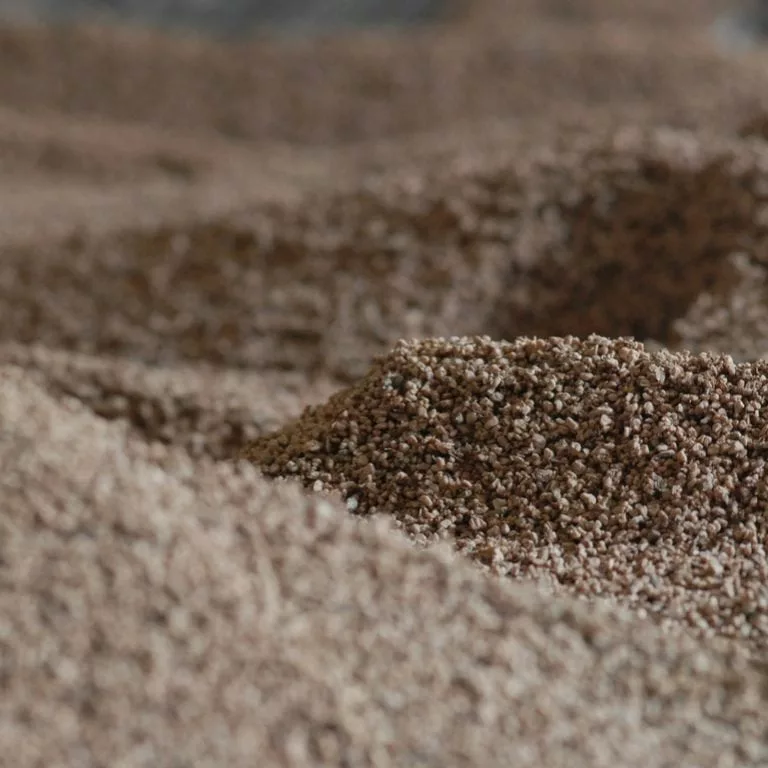
Key Considerations Before Choosing Biomass
Not every site is well-suited for a biomass boiler. Before committing, evaluate the following:
- Fuel proximity: Supply sources should be within a 60 km radius of the boiler room to keep transportation costs manageable.
- Long-term availability: Secure guaranteed fuel volumes through supplier contracts before investing in a boiler system.
- Fuel quality: Analyze the surrounding forest or agricultural environment to select the right fuel type — moisture content, energy density, and ash levels all affect boiler efficiency.
- Regulatory compliance: Confirm local air quality regulations and combustion system permitting requirements in your region.
Biomass systems require more hands-on management than geothermal, including fuel storage, ash removal, and regular boiler maintenance. However, for operations with access to low-cost local fuel, the return on investment can be highly compelling.
Geothermal vs. Biomass: Which Is Right for Your Greenhouse?
Both systems can significantly reduce a greenhouse’s dependence on fossil fuels, but they suit different operational profiles. Here’s a quick comparison to guide your decision:
| Geothermal | Biomass | |
|---|---|---|
| Heat output | Constant | Variable (depends on fuel) |
| Initial cost | High | Medium to high |
| Operating cost | Very low | Low to medium |
| Maintenance | Minimal | Regular |
| Land requirement | High (horizontal) / Low (vertical) | Moderate (storage) |
| Ideal for | Year-round heated greenhouses | Operations near wood/ag waste sources |
| Emissions | Zero on-site | Low (carbon-neutral cycle) |
Neither option is universally superior. Your choice should account for your site conditions, crop type, available budget, and proximity to fuel sources. Consulting with an expert before making this decision is strongly recommended.
3–5. Other Sustainable Energy Sources Worth Considering
While geothermal and biomass are the most widely adopted alternatives in greenhouse production, three additional green energy options are gaining traction:
3. Solar energy — Photovoltaic panels can offset electricity consumption for lighting, ventilation, and control systems, reducing your total energy bill without displacing your primary heat source.
4. Cogeneration (CHP) — Combined heat and power systems generate electricity and usable heat simultaneously from a single fuel source, significantly improving overall energy efficiency for large-scale operations.
5. Heat recovery systems — Recovering waste heat from industrial neighbors, composting operations, or on-site equipment is an increasingly popular low-cost supplement to primary heating systems.
Each of these solutions can be combined with geothermal or biomass to create a layered, resilient energy strategy for your greenhouse.
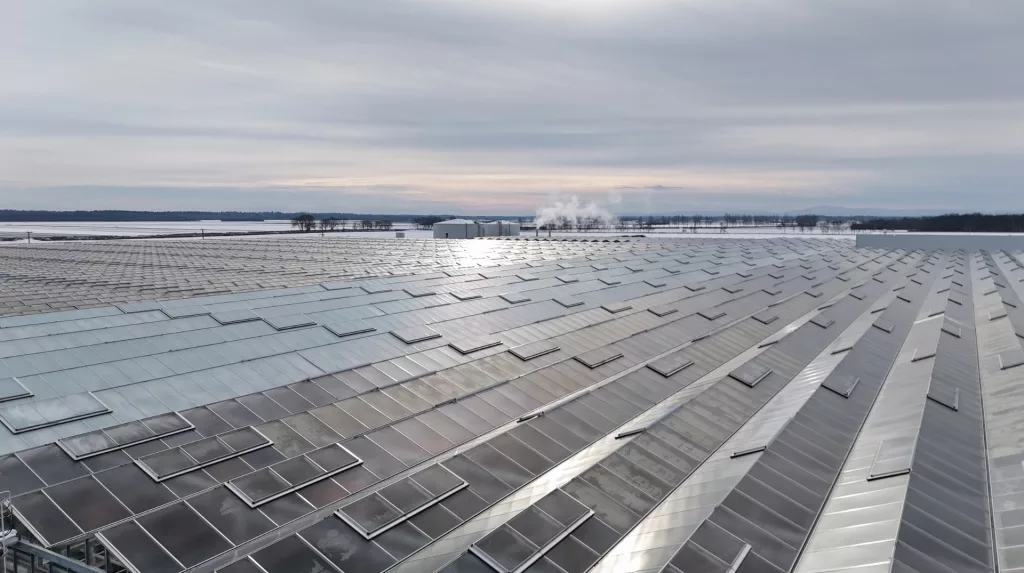
How Harnois Can Help You Plan Your Greenhouse Energy Strategy
Choosing the right renewable energy source is only one piece of the puzzle. The structure of your greenhouse also plays a major role in how much energy you actually need to begin with. A well-insulated, properly designed commercial greenhouse structure can dramatically reduce your heating load — making any energy system more effective and cost-efficient.
At Harnois, our team of engineers and agronomists works directly with growers to assess every factor: your climate zone, crop requirements, available land, energy budget, and long-term production goals. Whether you’re planning a new gutter-connected greenhouse optimized for biomass heating or a glass structure designed around geothermal integration, we can help you build a system that truly performs.
Our turnkey capabilities cover every stage of your project, from design and engineering to manufacturing and installation — all from a single, experienced partner.
Ready to reduce your energy costs? Request a quote and speak with a Harnois greenhouse advisor today.
