

Winter greenhouse growing allows you to supply fresh produce to your customers all year round. However, in northern climates, cold-season production comes with additional energy expenses that require careful planning. Understanding your winter greenhouse growing costs before starting is essential to determining whether year-round production is the right move for your operation.
This guide breaks down the main cost drivers, how to reduce them, and what equipment you actually need to grow profitably through the cold season.
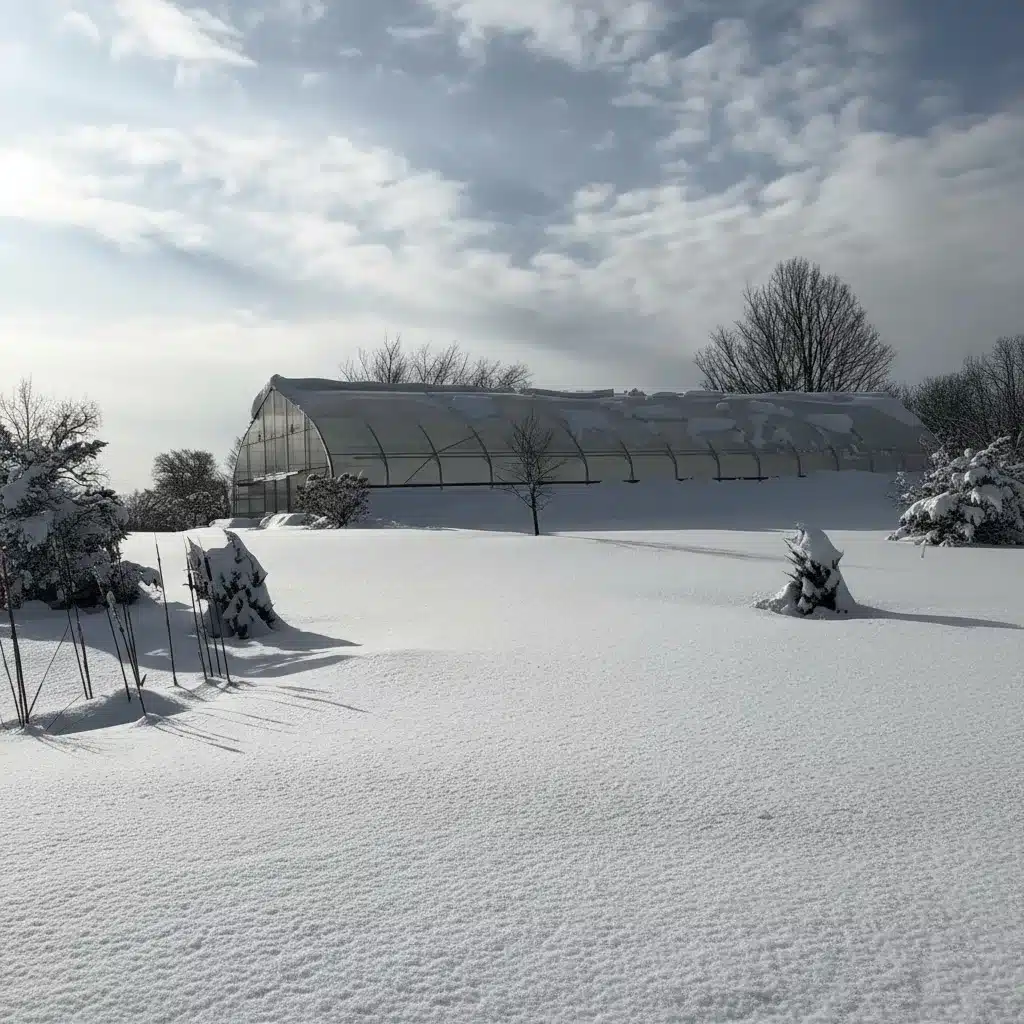
Costs associated to winter cultivation
Evaluate Your Energy Consumption First
Lighting and heating are consistently the two largest expenses in winter greenhouse production. Before you start, you need to calculate your energy consumption in kWh per piece of equipment over the cold-season period. This gives you a concrete figure to compare against your projected revenue — and determines whether winter production is financially viable for your operation.
Our Harnois experts can assist you with this energy audit. You can also consult MAPAQ (Quebec) or USDA programs for government subsidies that may offset a portion of your winter production costs.
The Impact of Greenhouse Structure on Operating Costs
The type of greenhouse structure you choose has a direct impact on how much you spend to heat and maintain the right growing environment in winter. A well-designed commercial greenhouse structure with proper insulation, adequate gutter height, and a suitable covering system will lose significantly less heat than an older or undersized structure.
For growers in Canada and the northern United States, structures engineered to handle heavy snow loads and extreme temperature differentials — like our Luminosa gutter-connected greenhouse or the Ovaltech freestanding model — provide the structural integrity and climate management needed for profitable four-season production.
Crop Choice and Market Demand
Volume matters. A large-scale culture allows you to spread your fixed energy costs across more units, which directly improves your margin. The type of crop you choose to grow in winter is therefore a critical business decision.
Some vegetables tolerate cold far better than others. Broccoli, spinach, kale, mixed salad greens, chard, and celery all perform well at lower greenhouse temperatures, reducing heating requirements. Consumer demand must be factored in as well — a cold-tolerant crop with no winter market is still unprofitable.
A compelling example: Québec-based customer Le Jardin des Funambules decided to supply restaurateurs with fresh vegetables throughout winter. They operate two greenhouses side by side — one heated to 5°C for Swiss chard, celery, and mixed greens, and a second cooler house dedicated to kale, spinach, and other hardy crops. By matching their crop selection to their actual heating budget, they kept their winter growing costs under control while maintaining consistent delivery to clients.
How to Reduce Winter Greenhouse Growing Costs
The main challenge of cold-season production is replicating summer growing conditions while controlling energy spend. Here are the most effective strategies:
Plan early and in detail. Adequate preparation leads to better productivity and fewer unexpected costs. Think through your crop rotation, heating zone layout, and equipment needs before the season starts. Our Harnois team is available year-round to help you build a solid production plan.
Install supplemental lighting. In northern regions, natural daylight is insufficient for most greenhouse crops between November and February. Supplemental lighting — whether LED or HPS — is not optional during this period; it is the only reliable way to maintain plant growth. As a secondary benefit, grow lights radiate a small amount of heat that supplements your main heating system.
Position your heating system at plant level. Heat rises, and positioning your heating infrastructure at crop height means the warmth directly reaches the plants before dissipating upward. This reduces total energy consumption without sacrificing crop performance.
Use thermal screens. Nighttime is where the most significant heat loss occurs in a winter greenhouse. Thermal screens — available in single or double layer — create an insulating barrier that prevents excessive temperature drops after sunset. A quality thermal screen system can reduce heating costs by approximately 40%, making it one of the highest-return investments you can make for year-round production.
Optimize your greenhouse footprint. Larger structures can be more expensive to heat in absolute terms, but they offer better production capacity per dollar spent. Elevated benches can increase your usable growing area without expanding the heated volume, helping you grow more with the same energy budget.
Manage humidity through climate control. In winter, the temperature gap between the inside of the greenhouse and the outside air creates serious humidity management challenges. Excess moisture encourages disease spread, including botrytis and mildew. A proper ventilation and climate control system is essential — not just for plant health, but for keeping your crop loss rate low enough to stay profitable.
Essential Equipment for Winter Greenhouse Production
Running a four-season greenhouse requires a complete equipment stack. Here is what you need:
- Heating system — sized to your greenhouse volume and target temperature
- Supplemental lighting — LED or HPS, matched to your crop’s light requirements
- Single or double thermal screens — for overnight heat retention
- Double-layer polyethylene film covering — provides an additional insulation barrier at the structure level
- Heating distribution at plant level — radiant or forced-air systems positioned low in the greenhouse
- Climate control system — for automated humidity, temperature, and ventilation management
Each of these systems integrates directly with Harnois greenhouse structures. Our goal is to provide growers with a complete growing environment from a single supplier — which simplifies installation, reduces compatibility issues, and makes ongoing support easier.
Is Winter Greenhouse Production Right for You?
Energy costs do increase significantly in winter. The honest answer is that winter greenhouse growing is not automatically profitable for every grower — it depends on your crop type, your local energy prices, the scale of your operation, and the market you are supplying.
A break-even analysis before you start is not optional. You need to know your cost per kilogram or per flat produced in winter and compare it against your selling price. If the numbers work, winter production can be a powerful competitive advantage — your customers get fresh, local produce when field-grown alternatives are unavailable, which supports premium pricing.
If the numbers are borderline, targeted investments in thermal efficiency — better screens, a tighter covering system, or a heating upgrade — may be enough to tip the balance toward profitability without a full facility overhaul.
Talk to a Greenhouse Expert
Every growing operation is different. Our agronomists and project managers work directly with growers to assess energy requirements, review structure options, and help you determine the right winter growing strategy for your climate and your crops.
Contact our team to evaluate your needs and start planning your project.
Whether you are starting from scratch or looking to upgrade an existing greenhouse to improve winter performance, Harnois Greenhouses has the structures, equipment, and expertise to help you grow through the cold season — profitably.
