

Choosing the right agricultural greenhouse is one of the most strategic decisions in any controlled-environment production project. A structure that is poorly suited to your reality can quickly generate significant cost overruns, slow the growth of your operation and compromise your long-term profitability. On the other hand, making an informed choice ensures a high-performing, scalable and profitable agricultural environment for years to come.
Since 1965, the experts at Harnois Greenhouses have been helping producers across North America make this strategic choice. Here are 5 essential tips for selecting the greenhouse that truly matches your needs.
Before choosing an greenhouse model, you need to build a rigorous business plan. This foundational document helps you identify opportunities in your local market, define your marketing territory, establish the necessary transportation logistics and develop your business model.
The feasibility study that follows is essential: it allows you to validate your target crop and choose the infrastructure best suited to your project. The Canadian Agricultural Partnership program offers valuable resources to help structure your agricultural approach right from the start.
An producer who skips this step risks ending up with an oversized or under-equipped greenhouse, unable to support long-term growth.
The type of production you want to develop is the primary criterion for choosing the right greenhouse. Each model offers different conditions in terms of temperature, humidity, light transmission and agricultural automation.
The Main Agricultural Structures in the Harnois Lineup
The Ovaltech is the most versatile model in the lineup. Available in manual or automated configurations, it supports a wide variety of crops: tomatoes, cucumbers, berries, lettuce, cannabis and much more. It is often the first choice for new agricultural producers thanks to its outstanding value for money.
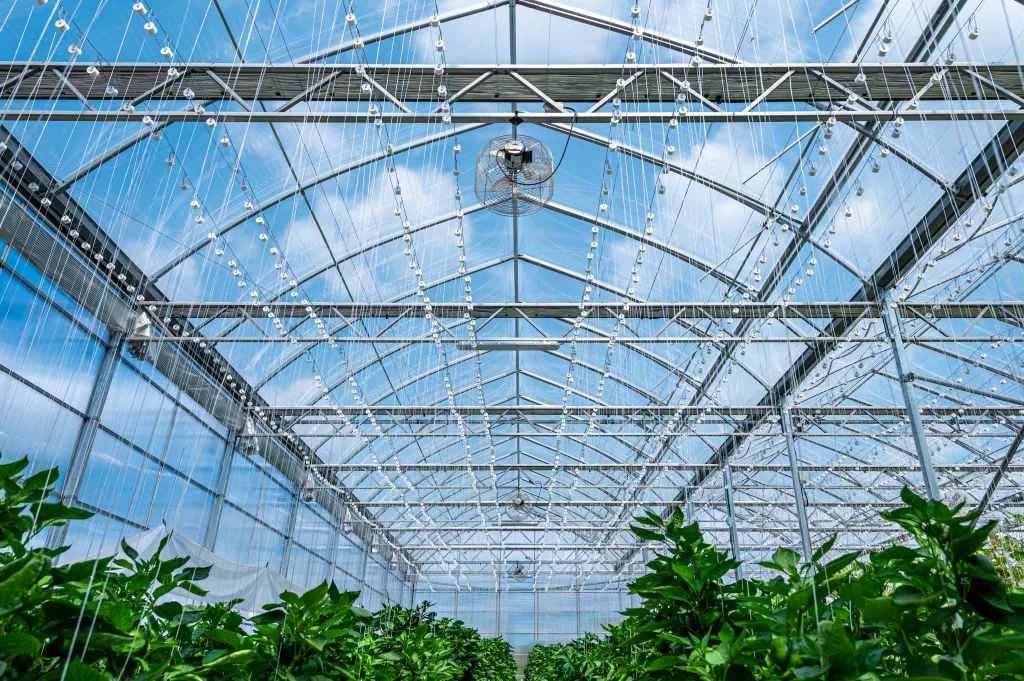
The Luminosa, a large-span twin greenhouse, is ideal for high-volume agricultural operations. It maximizes agricultural growing space, air circulation and light transmission — decisive advantages for intensive agricultural vegetable production.
Large agricultural tunnels are the ideal solution for starting an project on a limited budget. These structures extend the agricultural growing season by two to three months, increase agricultural yields by up to 40% compared to field production and reduce exposure to fungal diseases.
The Vermax, a Venlo-type glass greenhouse, is designed for large-scale agroindustrial projects such as commercial agricultural production of lettuce or tomatoes in a closed-loop system.
It’s not enough to find the ideal location; the types of construction permitted by the city must also be validated. Harnois supports you throughout the permitting process by helping you compile a complete file with all the required documents. Our team of engineers approves the plans, which generally speeds up the permit acquisition process.
The business plan and the analyses conducted at the beginning of the project help the producer choose the ideal greenhouse. They should plan for additional space to expand their business or introduce a new crop. Our greenhouses can be extended and/or widened (depending on the model) after the initial installation. This very attractive feature allows the entrepreneur to save significant amounts at the start of the project without limiting future growth.
Greenhouse production offers many advantages, including year-round production. However, a clear and precise plan must be established before starting a greenhouse farming project to ensure its success. You can count on the experts at Harnois Greenhouses to advise and support you throughout your project.
Ready to Find the Ideal Agricultural Greenhouse for Your Project?
Every agricultural operation is unique. The best way to determine the greenhouse that matches your reality — crop type, budget, location, ambitions — is to speak directly with our advisors. They assess your needs, visit your site if necessary and provide a custom proposal, from design to installation.
