

Greenhouse automation is no longer a luxury reserved for large-scale industrial producers. For growers of all sizes, semi-automated greenhouse systems have become one of the most effective answers to today’s most pressing challenges: a shrinking labor pool, rising operational costs, and growing demand for consistent, high-quality produce.
By strategically integrating greenhouse automation technology into your operations, you can free your team from repetitive tasks, reduce waste, and scale your production with confidence. Here are 7 compelling reasons why greenhouse automation should be your next investment.
- Efficient Resource Management
Water, nutrients, and energy are your most critical — and most costly — inputs. Manual management of these resources inevitably leads to waste through human error, inconsistent application, or delayed responses to changing conditions.
Automated greenhouse systems continuously monitor and adjust resource delivery based on real-time data. Drip irrigation controllers, for example, can calibrate water flow to the exact needs of each crop zone, reducing water consumption by up to 30% compared to conventional methods. Automated fertilization dosing systems ensure that nutrient concentrations stay within optimal ranges around the clock — no manual testing required.
The result: lower input costs, less environmental impact, and more capacity for your team to focus on higher-value work.
Explore our full range of greenhouse equipment and irrigation systems.
- Automation of Labor-Intensive Tasks
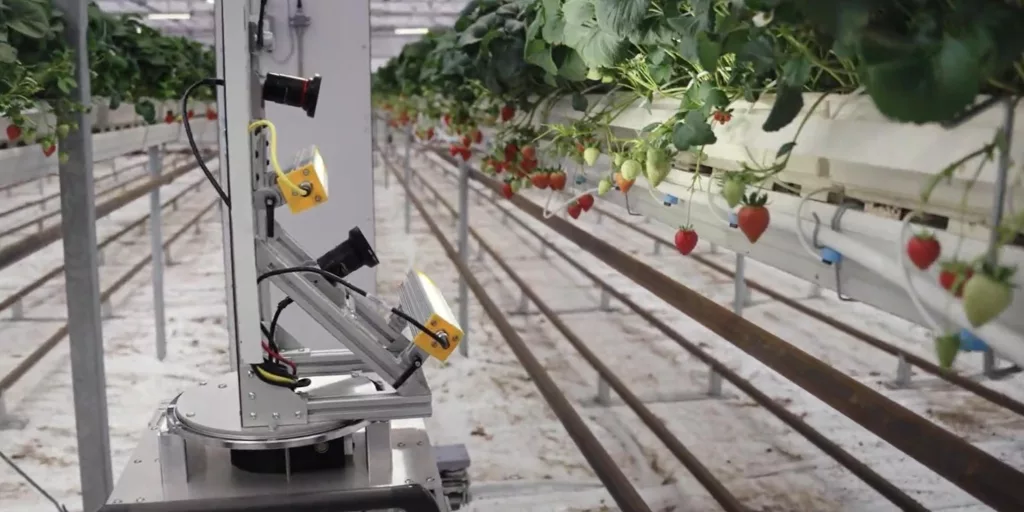
Some of the most physically demanding work in a commercial greenhouse — transplanting seedlings, watering rows, and harvesting mature crops — can now be handled by semi-automated or robotic systems.
Advanced robotic arms equipped with computer vision can assess crop ripeness and selectively harvest only the vegetables that are ready, dramatically reducing over-picking and crop damage. Automated seeding and transplanting machines can process thousands of units per hour with consistent spacing and depth — tasks that would require multiple workers and several hours to complete manually.
This doesn’t mean eliminating your workforce. It means redirecting your people toward skilled, strategic tasks where human judgment truly matters.
- Precision Agriculture Techniques
Semi-automated precision agriculture brings a new level of control to your growing environment. Sensor networks distributed throughout your greenhouse continuously collect data on temperature, humidity, CO₂ levels, light intensity, and soil moisture — parameters that directly influence crop health and yield.
When a sensor detects an anomaly — a drop in humidity or a spike in temperature — the greenhouse automation system triggers an automatic corrective response, whether that’s activating a ventilation fan, adjusting a shade screen, or alerting a technician. This targeted, real-time intervention replaces constant manual monitoring and dramatically reduces the risk of crop loss due to environmental stress.
Precision agriculture also enables zone-based management, allowing you to cultivate multiple crop varieties under optimized, individualized conditions within the same structure.
- Remote Monitoring and Control
One of the most transformative benefits of greenhouse automation is the ability to manage your entire operation from anywhere — your office, your home, or even while traveling.
Modern semi-automated greenhouse systems are equipped with cloud-connected dashboards that provide live data on all critical parameters. Managers can review performance metrics, adjust climate settings, trigger irrigation cycles, and receive instant alerts in the event of equipment failure or out-of-range conditions — all from a smartphone or tablet.
This capability is especially valuable for operations with multiple sites, or for growers who want to reduce the need for overnight on-site personnel without sacrificing operational continuity. Rapid remote response means problems are resolved before they become costly incidents.
- Team Training and Skills Enhancement
Introducing automation to your greenhouse is not just a technological upgrade — it’s an investment in your people. Employees who learn to operate, monitor, and maintain automated greenhouse systems develop highly valuable technical skills that strengthen your entire organization.
Training programs centered on automation platforms improve staff engagement and retention. Workers who understand and manage advanced equipment tend to take greater ownership of outcomes and feel more valued within the operation. Over time, this creates a more resilient, adaptable team capable of supporting continued growth and innovation.
As automated systems take over repetitive physical tasks, your team’s role evolves toward supervision, data analysis, and strategic decision-making — a shift that benefits everyone.
- Increased Production and Yield Consistency
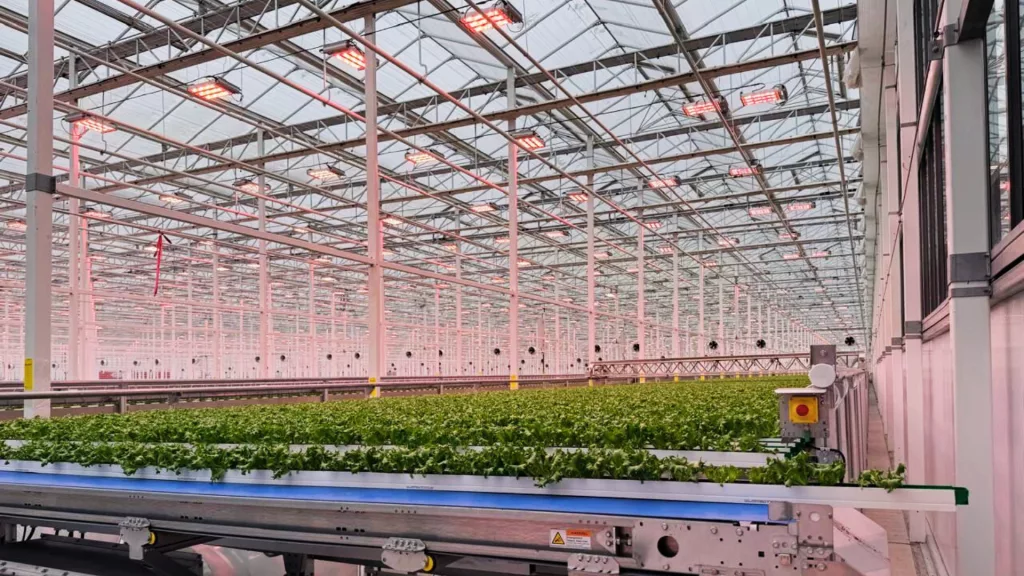
Automated greenhouse systems don’t take breaks, don’t get fatigued, and don’t vary their performance from one day to the next. Climate control systems maintain ideal growing conditions 24 hours a day, 7 days a week, regardless of outdoor weather conditions.
This operational consistency directly translates to higher and more predictable yields. Crops grown under stable, optimized conditions are more uniform in size, color, and maturity — a critical advantage when supplying retailers or food service clients who require consistent product quality and reliable delivery schedules.
For growers looking to scale, greenhouse automation is the foundation that makes predictable, repeatable production possible without a proportional increase in labor costs.
Learn how our commercial greenhouse structures are designed for automation integration.
- Long-Term Cost Reduction
Every advantage described above ultimately converges on one outcome: a more profitable greenhouse operation.
Reduced labor requirements lower your payroll costs. Optimized resource consumption cuts water and energy bills. Fewer crop losses increase the value of each harvest. Consistent product quality reduces rejections and returns. And remote monitoring reduces the need for round-the-clock on-site staffing.
While the initial investment in greenhouse automation technology requires careful planning, most growers see measurable ROI within the first two to three growing seasons. When you factor in the ongoing savings and the competitive advantages of a more efficient operation, the financial case for automation becomes clear.
Semi-Automation: Your Ally in Saving Time and Resources
Greenhouse automation is not about replacing growers — it’s about empowering them. Semi-automated systems are designed to complement human expertise, not substitute for it. By taking over the repetitive, resource-intensive, and physically demanding aspects of greenhouse management, automation frees you to focus on what matters most: growing exceptional crops, building strong customer relationships, and making strategic decisions for the future of your business.
Whether you’re managing a research facility or a large-scale commercial greenhouse, the right automation strategy can help you do more with less — and stay competitive in a rapidly evolving industry.
Ready to explore semi-automated greenhouse solutions? Discover our greenhouse structures and integrated automation systems →
Frequently Asked Questions
What is semi-automation in a greenhouse? Semi-automation refers to the use of technology to handle specific tasks — such as irrigation, climate control, or harvesting — while still relying on human oversight and intervention for strategic decisions. It offers the efficiency benefits of full automation with greater flexibility and lower upfront costs.
How much does greenhouse automation cost? Costs vary widely depending on the size of your operation and the systems you implement. Basic climate control and irrigation automation can start at a few thousand dollars, while full robotic harvesting systems represent a larger investment. Most growers find that ROI is achieved within 2–3 growing seasons through labor and resource savings.
Can small greenhouses benefit from automation? Absolutely. Even simple automated irrigation timers or sensor-triggered ventilation systems can significantly reduce labor needs and improve crop consistency for small-scale operations. Greenhouse automation scales to fit any operation size.
What are the main types of greenhouse automation systems? The most common greenhouse automation systems include climate control (heating, ventilation, cooling), automated irrigation and fertigation, robotic harvesting arms, seedling transplanting machines, remote monitoring dashboards, and sensor networks for precision agriculture.
How long does it take to implement greenhouse automation? Implementation timelines vary by system complexity. Basic irrigation and climate control automation can be installed within days. Full robotic systems for large commercial greenhouses may require several weeks of installation and calibration. Harnois works with growers to develop phased automation strategies that minimize disruption to active production.
Browse our greenhouse projects to see automation in action.
