
Whether you grow hydroponically, aquaponically, in the ground, or through a hybrid cultivation method, most commercial greenhouse producers face the same two core challenges:
- Limited financial resources and difficulty managing capital expenses
- Labor shortages and rising manpower costs
Finding effective solutions to these problems is essential — they directly affect the long-term profitability of your operation. This guide walks you through proven strategies to take control of your greenhouse production costs.
Financial Resources for Greenhouse Producers
Lack of financing is one of the primary obstacles for new and growing producers. A thorough analysis of market demand, production needs, and operating costs — including heating, ventilation, and lighting — is the foundation of any profitable greenhouse business.
Understanding Your Market Before You Build
A crop that generates strong income typically has a fast production cycle and consistent consumer demand. Conducting a market analysis alongside reviewing industry reports on indoor farming helps you identify opportunities and optimize your production mix before committing capital.
The additional revenue generated by the right crop selection can be reinvested in greenhouse technology and equipment upgrades or channeled into an expansion project — steadily increasing your profit margins over time.
Phased Expansion: Control Costs While You Grow
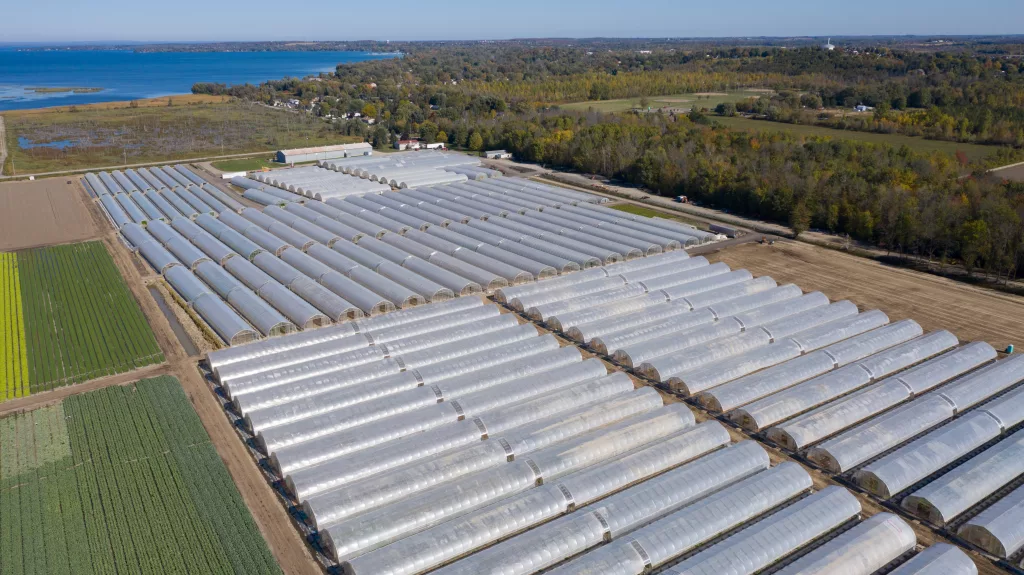
A phased expansion plan is one of the most effective financial strategies for commercial greenhouse cultivation. Rather than building your full operation at once, you spread capital expenditures over several years while limiting exposure early on.
Starting with a smaller number of bays reduces your initial labor costs, equipment purchases, and energy consumption. The first phase lets you test market demand and sharpen your understanding of production cost management before scaling.
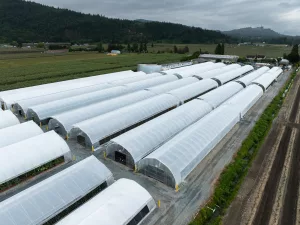
Harnois greenhouse structures are engineered to be extended after the initial installation — without interfering with your active production. This means subsequent phases can be launched on your schedule, leaving crops untouched during construction. The result: you stay within budget and reduce your learning curve.
Securing Greenhouse Financing
Seeking funding is typically one of the first steps in any greenhouse project. A strong funding request presents a complete picture of your project, your business model, and your projected returns. Understanding what lenders and grant programs look for — and how to structure your application — can make a significant difference in the outcome.
For producers in Canada, programs such as Agriculture and Agri-Food Canada’s Growing Forward and provincial agricultural development funds offer targeted support for greenhouse infrastructure investments.
Managing Greenhouse Manpower & Labor Costs
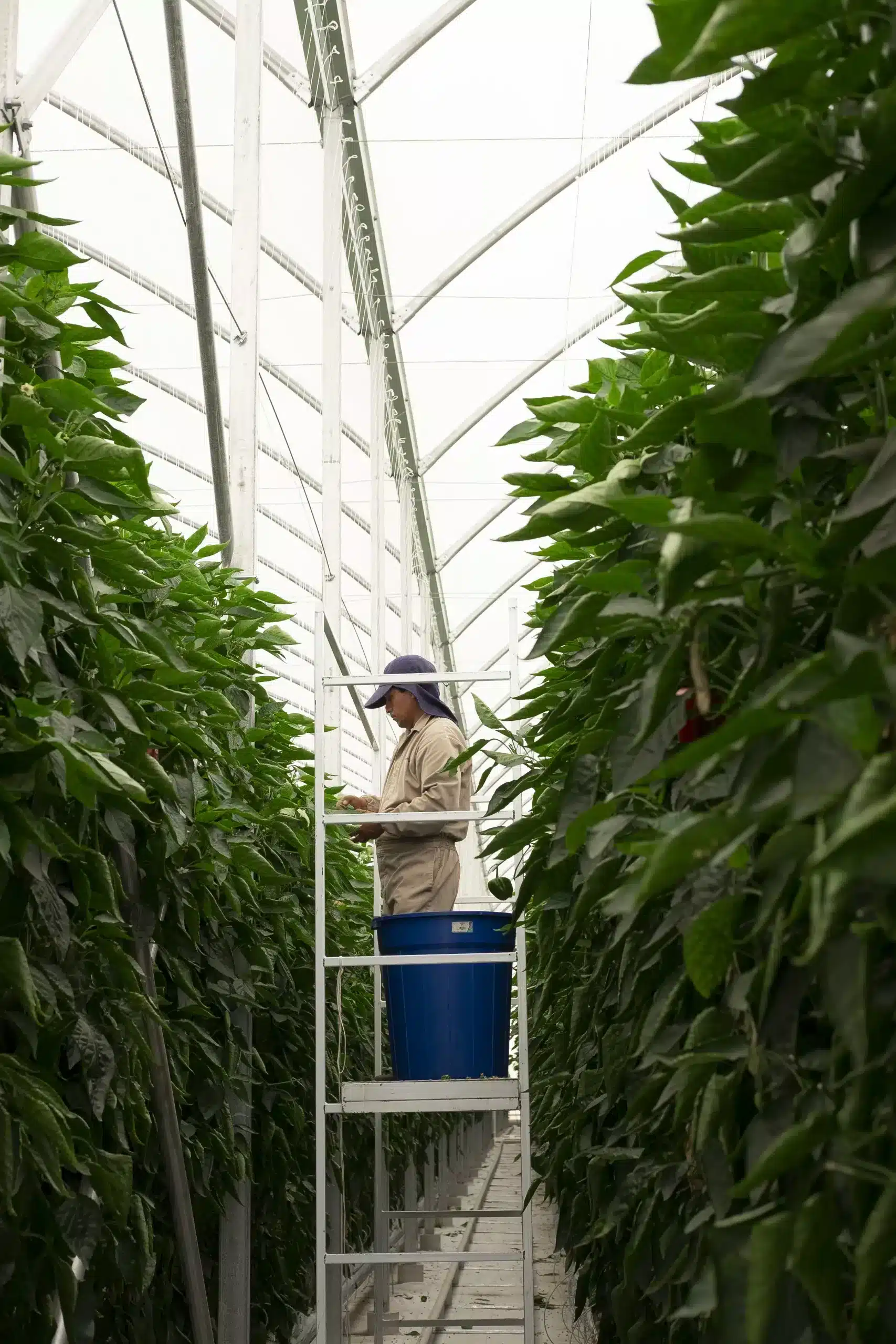
Manpower is the single largest operating expense for greenhouse producers of all sizes — representing, on average, more than half of total operating costs for both small and large operations. Two of the most impactful solutions are improving the work environment and investing in greenhouse automation.
Employee Well-Being as a Retention Strategy
Labor shortage in agriculture is one of the defining challenges of greenhouse production today. To attract and keep skilled workers, employers need to rethink their management practices and make the workplace genuinely appealing.
Concrete levers include:
- Recognition programs that acknowledge worker contributions
- Decision-making autonomy that gives employees ownership over their tasks
- Structured training pathways for both permanent staff and returning seasonal workers
Training is particularly valuable for foreign agricultural workers who return year after year — building competency and loyalty simultaneously. AGRIcarrières offers an online learning platform specifically designed for agricultural workers and employers, making it easy to upskill your team without disrupting operations.
These investments position your business as an employer of choice — a meaningful competitive advantage in a tight labor market.
Greenhouse Automation: Reduce Labor While Improving Quality
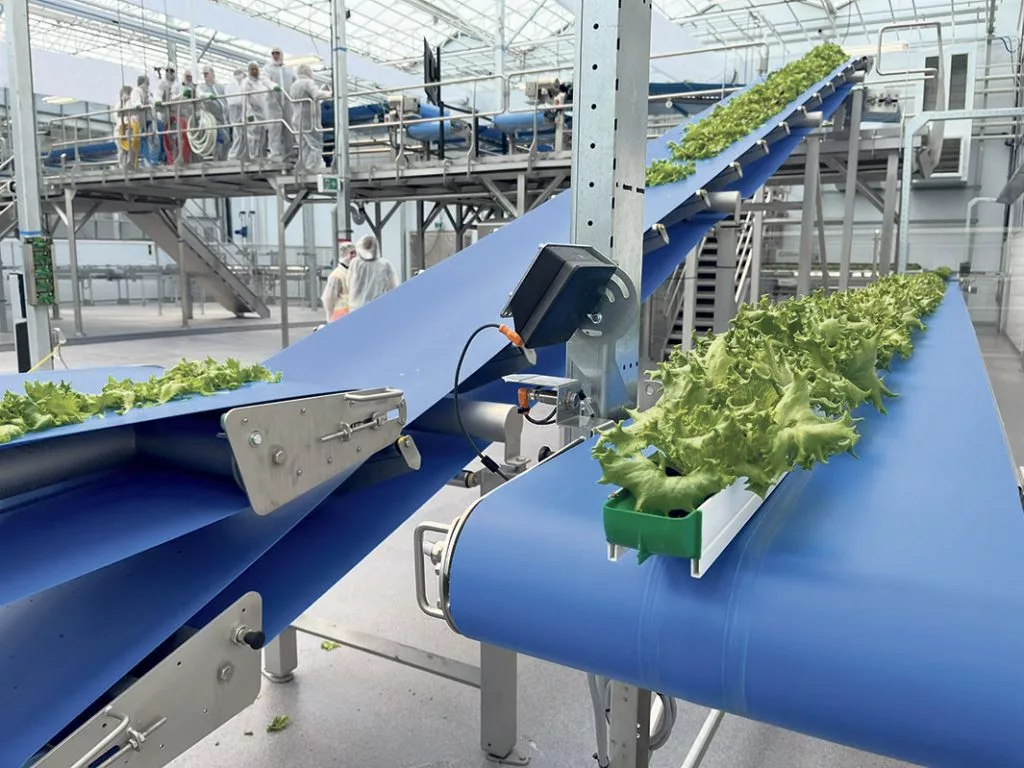
Automation increases production output, improves crop quality, streamlines operations management, and directly reduces labor requirements. It is one of the highest-ROI investments a greenhouse producer can make.
Like your physical expansion, automation can be implemented in phases to spread costs over time. A practical sequence:
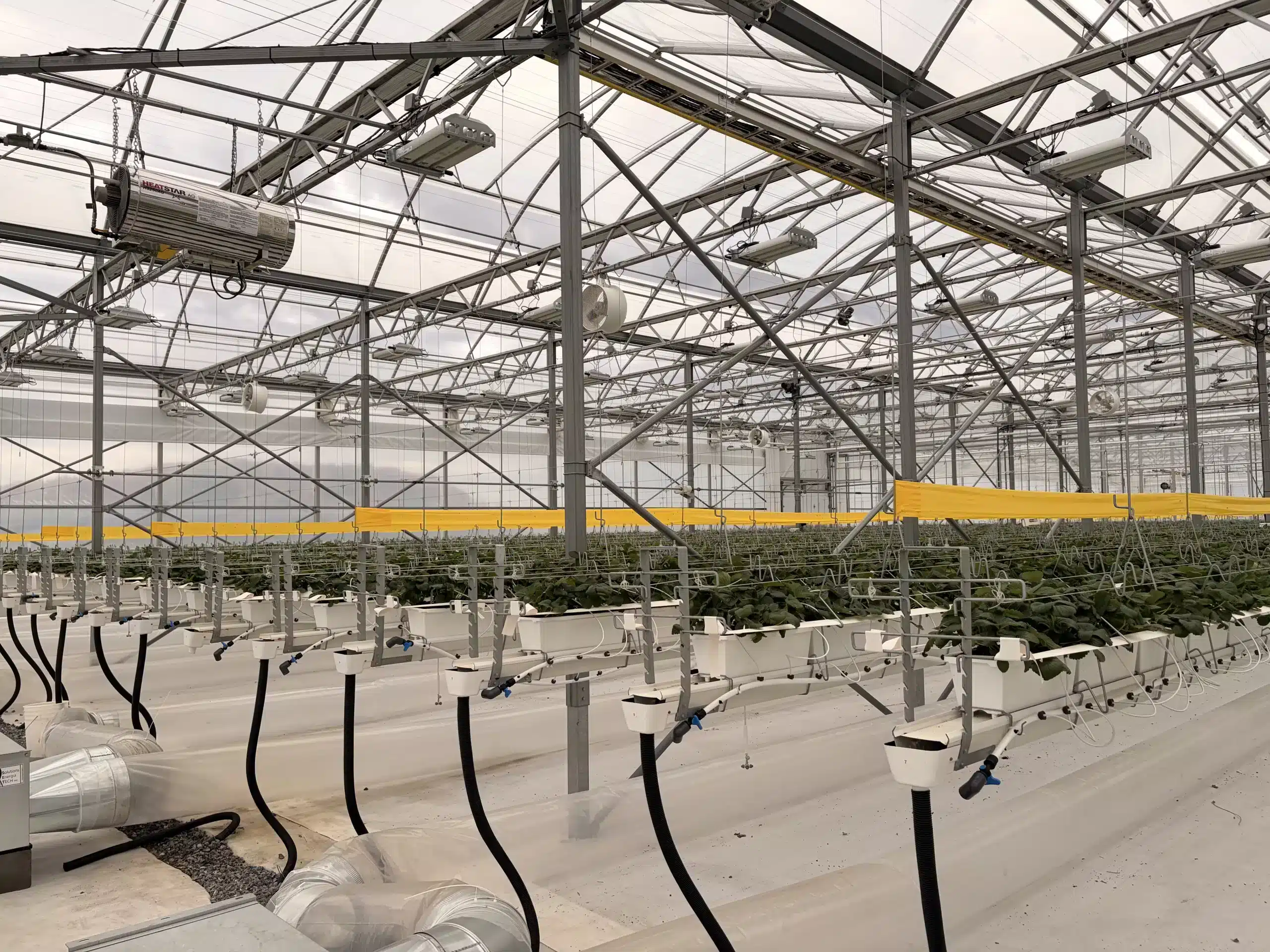
- Start with climate control — Automating your greenhouse heater and ventilation system with a weather station manages roof and sidewall openings automatically to maintain optimal temperature and humidity. This single investment reduces both energy waste and the need for manual monitoring.
- Add lighting automation — Automated greenhouse lighting optimizes photoperiod and energy use across your growing cycles.
- Expand to heating and irrigation — Integrating precision heating and automated irrigation systems into a centralized control panel creates a cohesive, responsive growing environment.
- Implement computer control — The final stage allows full remote management of your greenhouse: real-time alerts, statistical data collection, and workflow optimization for both plant care and team management.
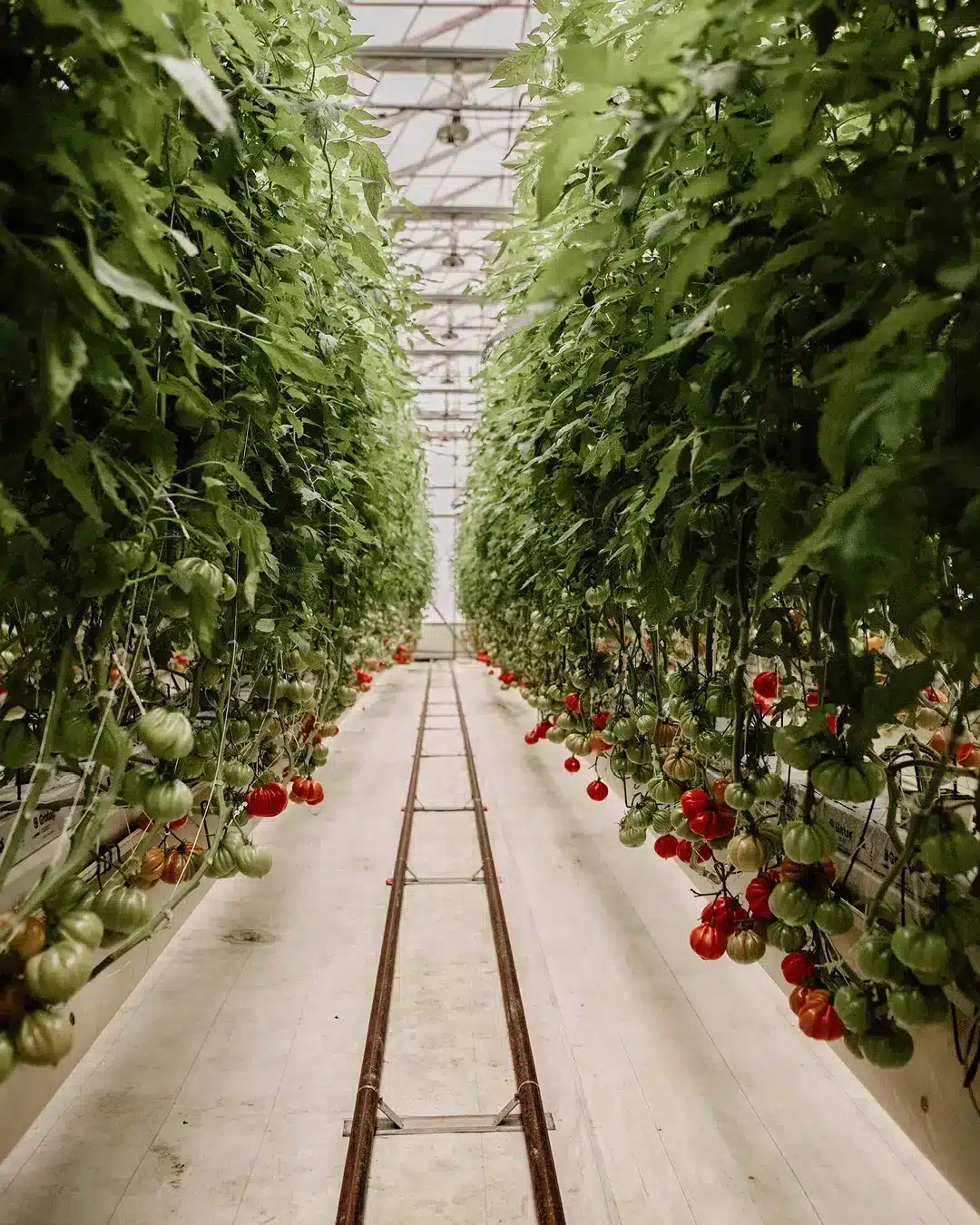
According to the USDA’s controlled environment agriculture data, hydroponic greenhouses consistently outperform conventional field production — with tomato yields reaching 10.59 lb/ft² versus 1.85 lb/ft² in the field, and lettuce yields of 8.71 lb/ft² versus 0.69 lb/ft².
Controlling Greenhouse Building & Operating Expenses
The Most Energy-Intensive Sources of Expenditure
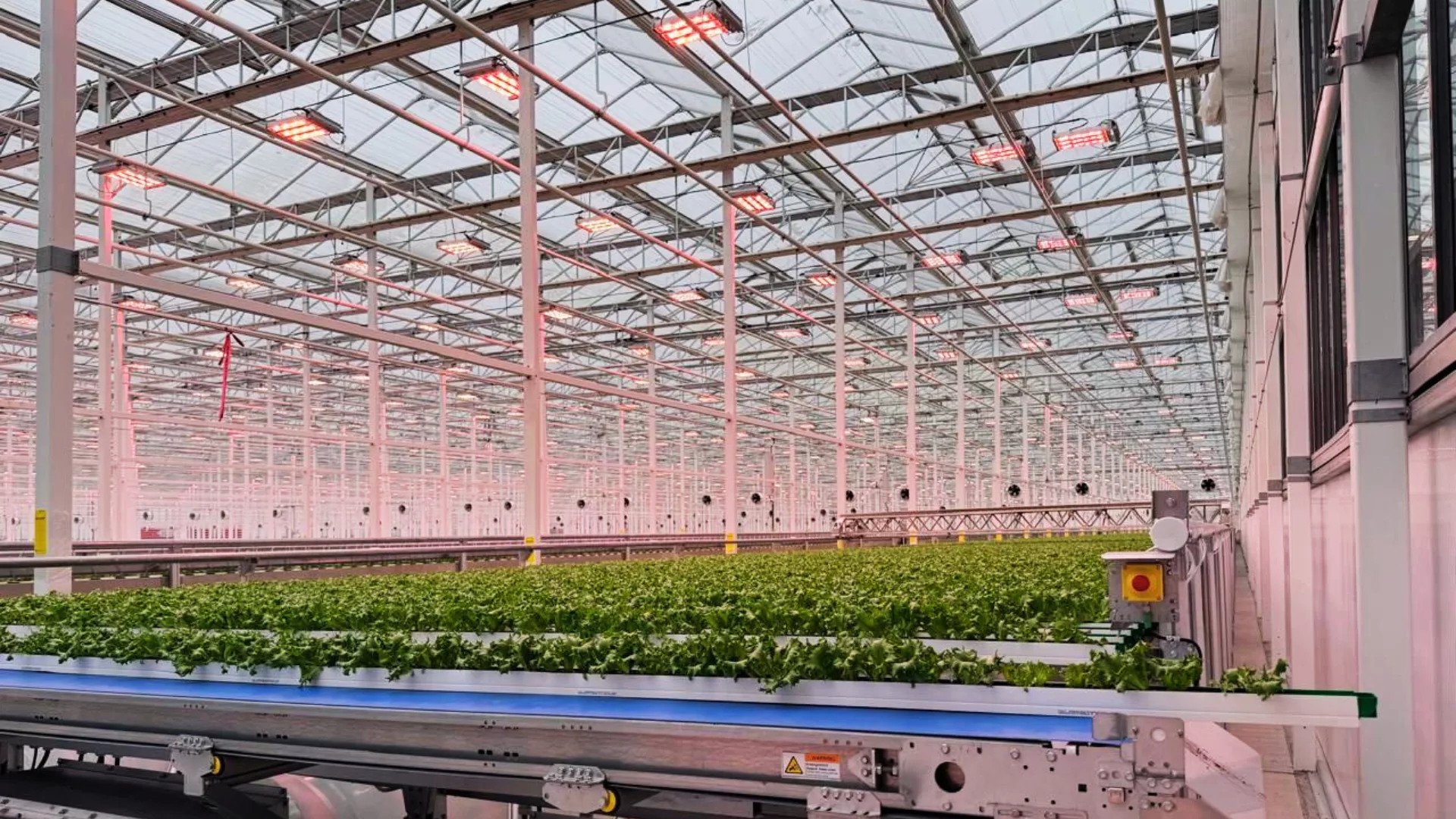
Heating and lighting represent the two largest operating cost categories in greenhouse production. The most effective way to offset these costs is to maximize crop productivity — generating enough revenue per square foot to comfortably amortize your overhead.
Fortunately, greenhouse cultivation is inherently more productive and profitable than traditional field farming. A controlled growing environment delivers faster crop cycles, higher yields per harvest, and more harvests per year — fundamentally changing the economics compared to outdoor agriculture.
Tomato harvest — hydroponic greenhouse vs. conventional farming:
- Conventional: 1.85 lb/ft²
- Hydroponic greenhouse: 10.59 lb/ft²
Lettuce harvest — hydroponic greenhouse vs. conventional farming:
- Conventional: 0.69 lb/ft²
- Hydroponic greenhouse: 8.71 lb/ft²
Source: USDA / Artemis Industry Report (2016)
The ability to create microclimates by sections within your greenhouse also opens up crop diversification strategies. High-demand crops like cut flowers, or fast-growing produce like lettuce and leafy greens, are excellent options for boosting revenue per square foot.
Insect and Disease Management
Pests and disease outbreaks can erode margins quickly — driving up costs and reducing harvestable yield. A well-designed greenhouse provides a physical barrier against many common invaders and significantly reduces your dependence on pesticides compared to outdoor production.
Integrated pest management (IPM) strategies, combined with the environmental control capabilities of a modern greenhouse structure, give producers a level of precision and consistency that field farming simply cannot match.
Explore all the advantages of commercial greenhouse cultivation to understand how a well-executed greenhouse strategy addresses these challenges systematically.
Harnois Greenhouse Bench Systems: Durable, Flexible, and Efficient

Flower Farming: From Purpose to Profit
Commercial Greenhouse Buying Guide for Professional Growers
Alberta Growing Greenhouses Program: Grant for Commercial Greenhouse Growers
How Harnois Greenhouses Compare to Other Greenhouse Brands in Long-Term Durability and ROI